
Epoxy Basement Flooring
in Mendota, IL
A clean, sealed floor that changes what a basement can actually be used for.
Your Basement Shouldn't Feel Unfinished From the Floor Up
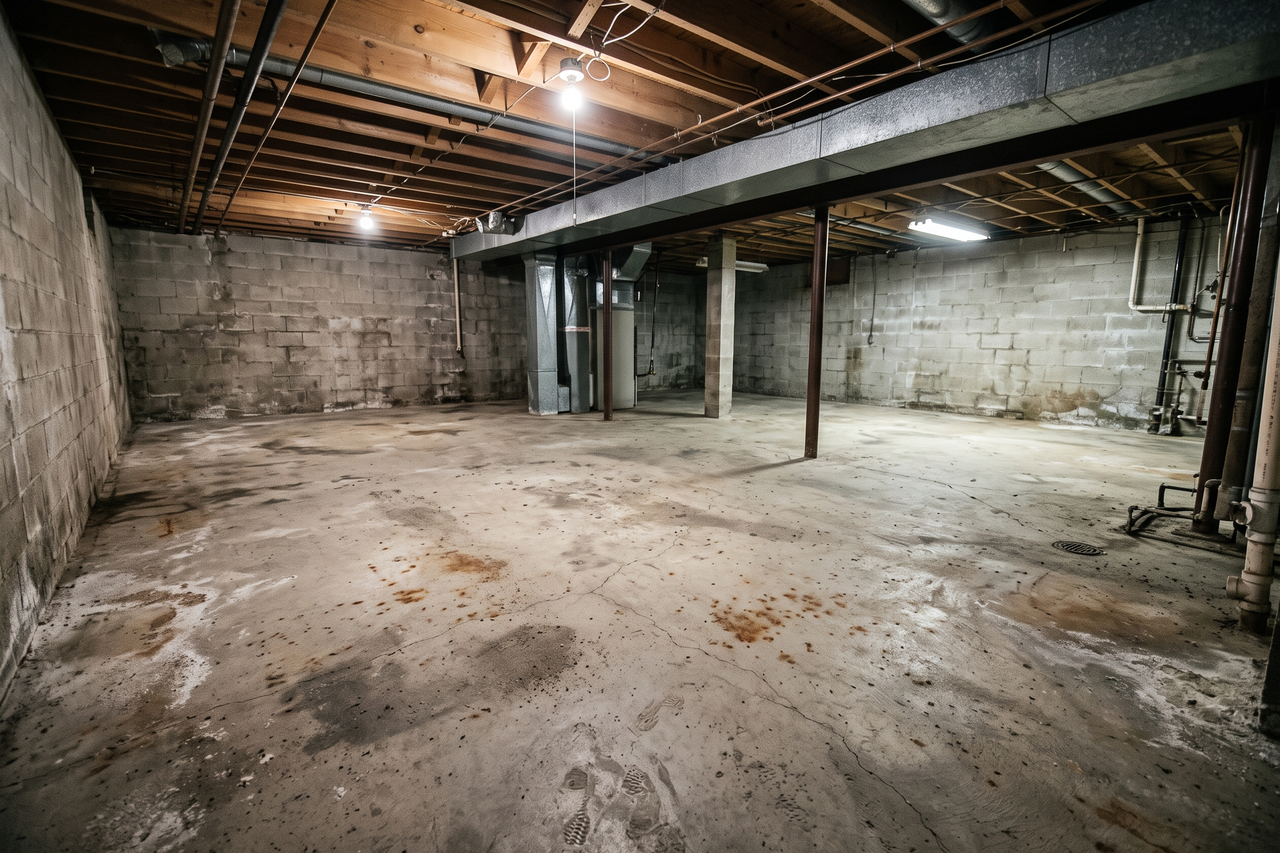
Most basements have more potential than they deliver. Square footage sits available for a gym, a gathering room, a hobby space, or organized storage — but that potential is hard to reach when the floor is bare, dusty concrete that looks and feels like the project was never finished.
Concrete basement floors collect grime, shed a fine dust that settles on everything at floor level, and soak up spills rather than repelling them. The surface becomes a reason to use the space less rather than more.
Floor materials that work well in above-grade rooms often aren’t a reliable match for a slab that sits at or below grade. A coating system purpose-built for concrete gives you a sealed surface that fits the environment rather than fighting it.
The Right Basement Floor Starts With the Concrete Underneath
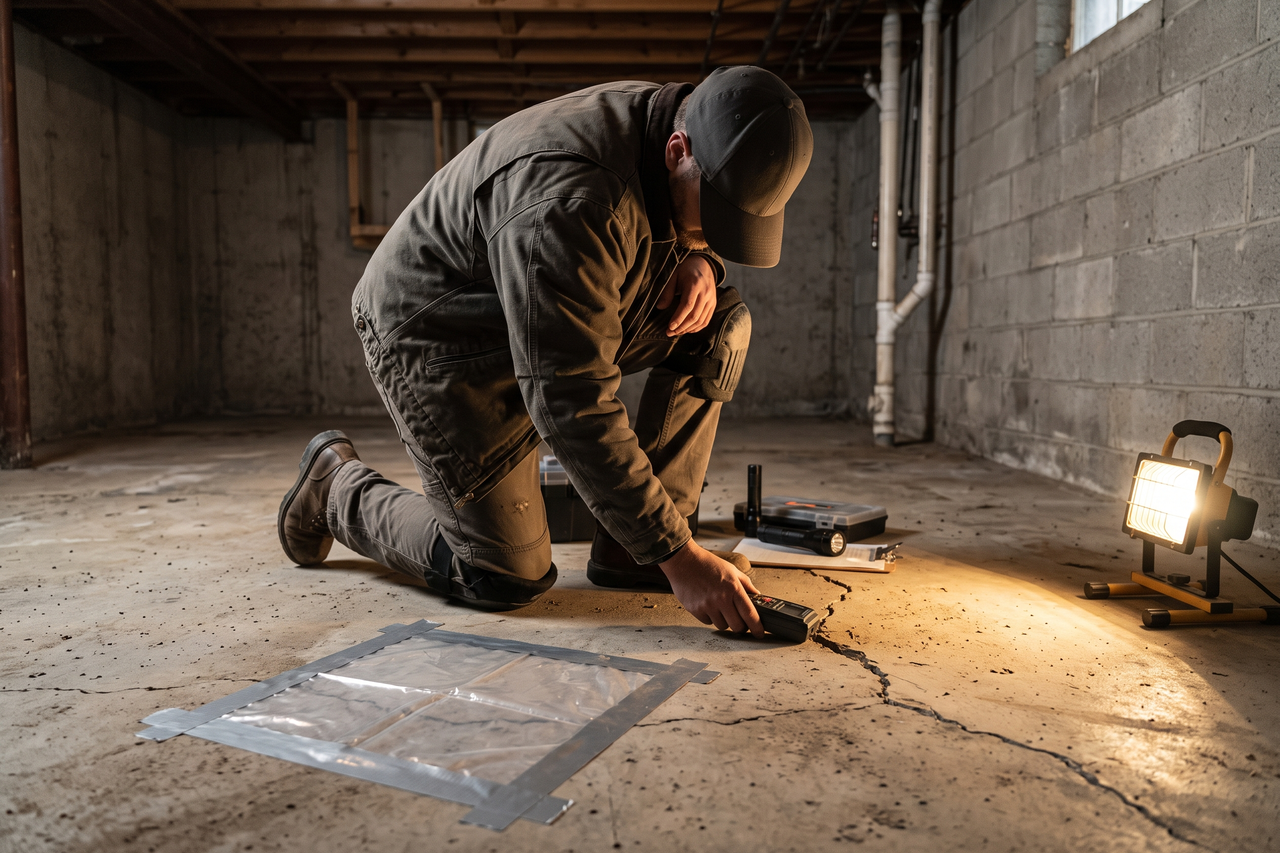
Unlike slabs at street level, basement concrete often comes with complications. Moisture is a key one — whether it moves through the slab or enters from below — along with old paint, adhesive, prior patches, and hairline fractures, any of which can affect how a coating performs and what preparation needs to involve.
The flooring contractor evaluates the concrete first — moisture testing is carried out where the slab warrants it — before any coating system is selected. A coating installed without that groundwork may perform acceptably at first and then struggle as moisture works against the bond over time.
Once the slab is understood, finish choices become straightforward. Solid colors deliver a clean, uniform look. Flake blends add texture and visual variation that holds up under daily foot traffic. Metallic epoxy can give a finished basement an appearance well beyond what any painted surface could offer.
A Better Basement Floor Is Easier Than You Think
Getting started is more straightforward than the project might look from the outside.
01
Tell Us About Your Basement
Walk us through the basement — how you’d like to use it, what you know about the current floor, and any history with moisture or previous coatings.
02
Choose the Right Floor
Based on the slab evaluation, the contractor explains what coating options the concrete can realistically support and recommends a system and finish matched to the conditions and the room’s intended use.
03
Transform the Space
Once preparation is done and the coating is installed, the contractor explains the curing expectations and returns the space ready for actual use.
Ready to Make Your Basement Feel Finished?
If the basement floor has been on the list for a while and you’re not sure where to begin, a conversation is the right first move. Tell us what the space looks like now and what you’d like it to become, and we’ll work to connect you with an independent flooring contractor who can review the project and, if it’s a fit, prepare a customized estimate.
Don't Turn Your Basement Floor Into a Project You Have to Do Twice
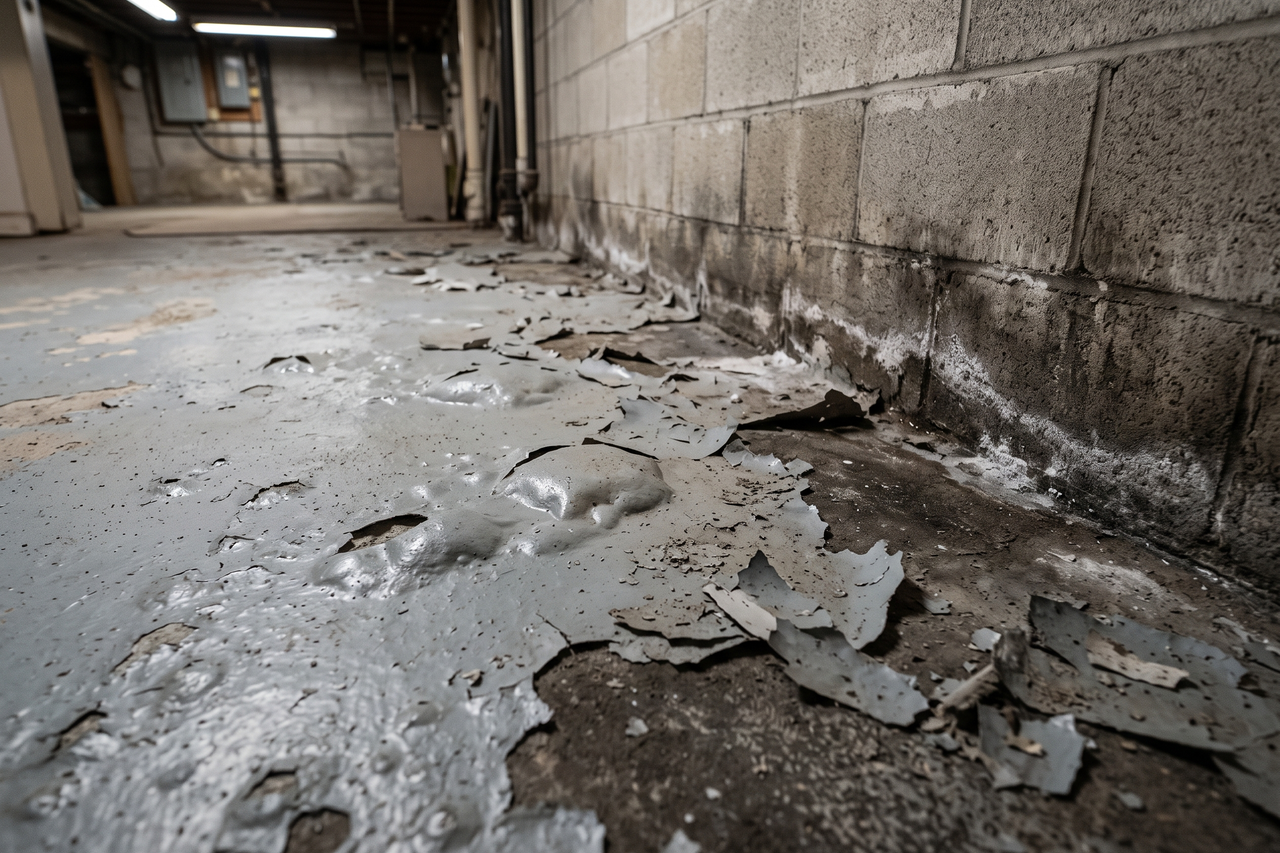
Basement coatings that fail tend to do so for identifiable reasons. Old sealer or paint left on the surface, concrete that wasn’t opened up to the right profile, and moisture that wasn’t evaluated before the coating went down are often part of the problem. None of these is unusual — but overlooking them means the new coating starts from a weaker position.
Moisture below grade is a commonly overlooked factor. If it isn’t evaluated and addressed before any coating is applied, it can work its way against the bond from beneath the surface, leading to bubbling, lifting, or delamination.
Thorough preparation takes more time and upfront investment than simply rolling a product onto concrete. It gives the new surface a better foundation for long-term performance and reduces the likelihood of having to strip the floor and start over.
A Floor That Changes How Your Basement Feels
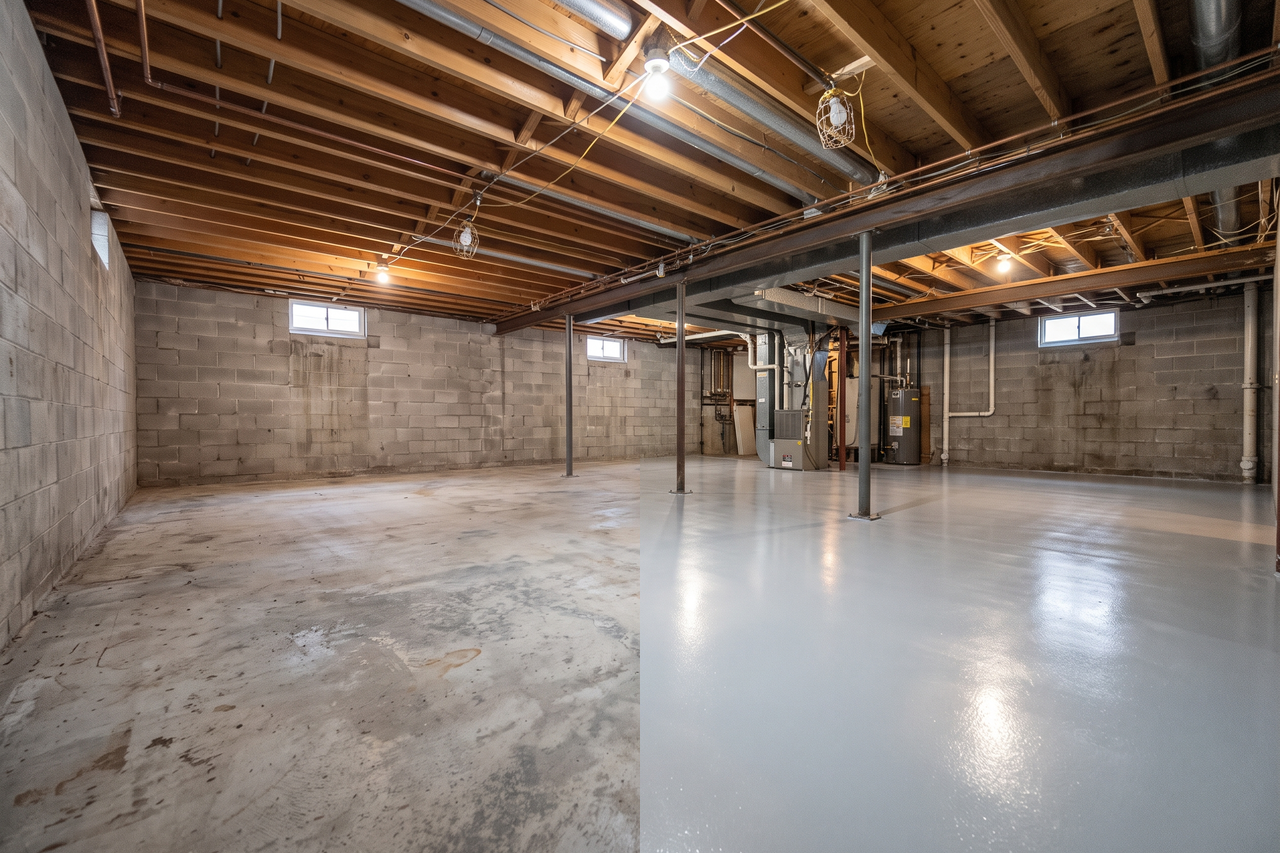
Once the slab is coated, the character of the basement shifts. Light spreads farther instead of getting absorbed by gray concrete, grime stops accumulating at floor level, and spills can be wiped up before they sink in.
A sealed floor alters how the whole space gets experienced. Rooms that sat mostly unused because the floor made them feel inhospitable start being used the way they were meant to be. A storage corner becomes navigable. A gym space feels clean enough to actually use. An entertainment room feels finished rather than improvised.
The basement floor has more influence over how that entire level reads than the square footage alone suggests — and a properly coated surface makes clear that the room is complete.
What Does Epoxy Basement Flooring Cost?
Pricing for a basement floor coating varies depending on the square footage, what the slab evaluation turns up, whether old coatings or adhesive have to be stripped, any crack repairs needed, moisture-related prep, and the system and finish selected.
Every slab is different, and the most accurate estimate comes from seeing yours. A clear quote is built around what the contractor finds when reviewing the concrete and discussing how you plan to use the room.
Common Questions About Epoxy Basement Flooring
Can a basement floor that has moisture be coated?
The answer hinges on how much moisture is present and where it originates — both of which need to be evaluated before any coating choice is made. Some conditions can be managed with the right primer; others have to be resolved at the source. The contractor assesses the slab and explains what it can realistically support.
Will an epoxy coating stop water from entering my basement?
No. A floor coating is a surface treatment, not a waterproofing solution. Leaks, seepage, or water that enters the space from outside need to be resolved separately before any coating goes down. When a coating is installed over an ongoing water problem, failure usually follows.
Does old paint or adhesive on the floor have to be removed first?
Old paint, sealer, or adhesive typically has to come off first. A new coating bonds to concrete directly, and the contractor determines what preparation is needed to get the surface properly ready for the new system.
Is a coated basement floor hard or cold underfoot?
The surface you get is still concrete at its core — firm underfoot and similar in temperature to the slab beneath it. A finished floor simply means it’s clean and sealed rather than rough and dusty. Rugs and interlocking mats work just as well on a coated slab as anywhere else.
What finish choices are available for a basement?
The most common choices are solid colors (clean and uniform), decorative flake systems (textured, hides everyday scuffs), and metallic epoxy (a high-gloss layered look suited to spaces where the floor is meant to stand out). The best fit depends on how you use the room and the effect you’re going for.