Industrial Epoxy Flooring
in Mendota, IL
Heavy-duty floor coating systems evaluated and matched to the specific demands of your facility.
Your Floor Takes the Abuse. Your Operation Shouldn't
Industrial concrete takes a different kind of punishment than any other floor type. Forklifts and pallet jacks roll across it constantly. Heavy equipment sits and shifts. Fluids drip, spills happen, and through all of it the slab is expected to hold up without complaint.
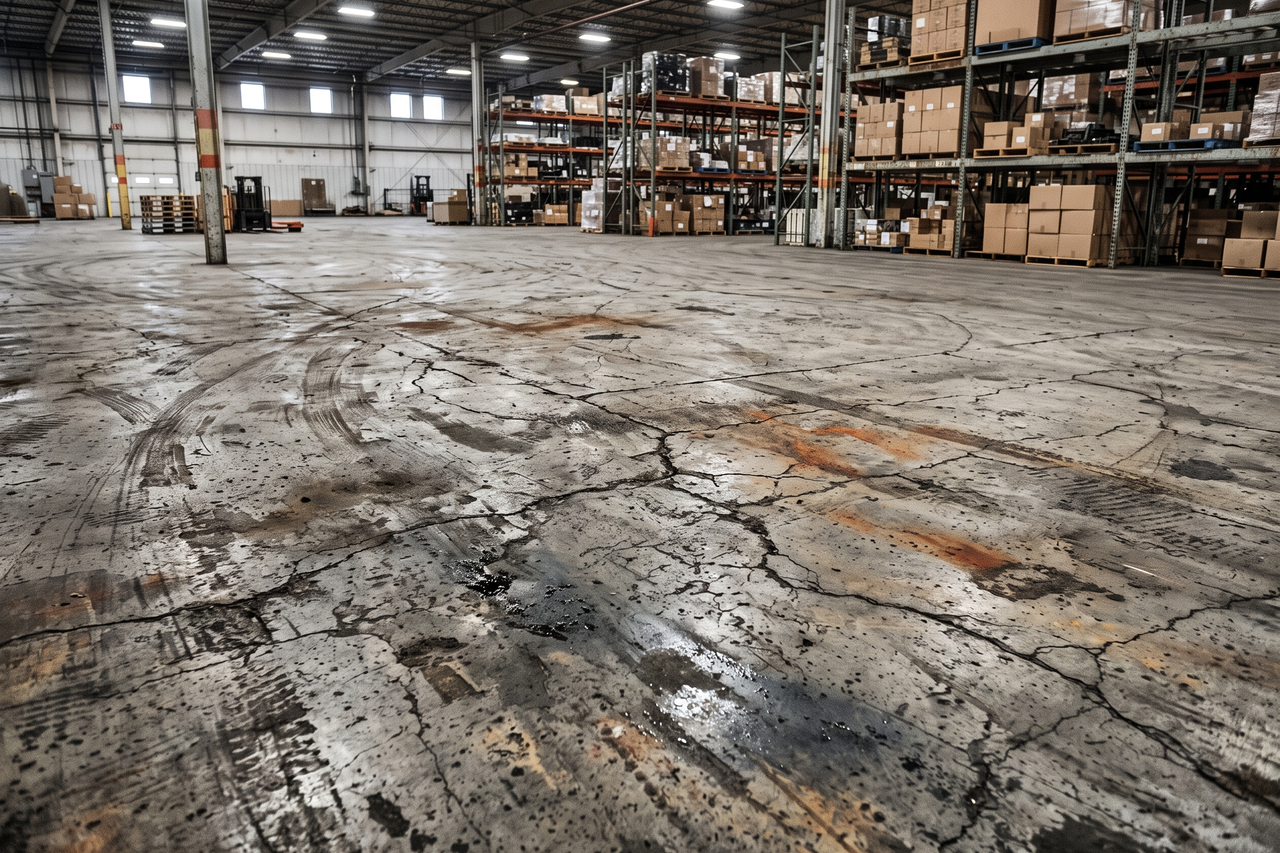
Uncoated industrial concrete absorbs that punishment directly. It dusts under traffic, develops pits and surface cracks from impact, soaks up chemical spills, and gradually becomes harder to clean as the surface degrades. A floor that started as a functional asset turns into a maintenance liability.
Beyond maintenance, a deteriorating industrial floor introduces real operational challenges. Uneven surfaces affect equipment movement, accumulated grime complicates housekeeping, and visible damage in a working facility sends the wrong message to staff and visitors.
Your Facility Determines the Right Flooring System
Industrial flooring isn’t a single product. It’s a category of systems that vary in thickness, chemical resistance, surface texture, and load-bearing characteristics — and the appropriate choice depends entirely on what your facility actually does.
A contractor evaluating an industrial floor looks at how the space is used: what rolls across it, what chemicals or fluids it contacts, how it’s cleaned, whether temperature swings affect the slab, and what safety markings or designated zones need to be incorporated. No honest recommendation can be made without that information.
The appropriate coating for a dry storage warehouse is rarely the right pick for a processing area where chemicals and heat are regular factors. Each environment places different demands on the floor, and a product that handles one set of conditions well may be entirely wrong for another. The contractor’s job is to understand your operation before specifying anything — not to default to whatever ships fastest.
Built Around Your Facility. Not the Other Way Around
Industrial flooring projects that go well start with a clear understanding of the operation before any material is selected.
01
Evaluate the Facility
The contractor inspects the slab condition, reviews the traffic and chemical exposure the floor handles, and identifies any existing damage or prep requirements before making a recommendation.
02
Build the Right Flooring Plan
Based on that evaluation, the contractor proposes a coating system matched to your facility’s demands and outlines a project scope — including preparation, repairs, and a schedule — discussed with you before work starts.
03
Put Your Floor to Work
The system is installed and cured on a timeline the installer confirms in advance, based on the coating selected, the floor size, and site conditions specific to your project.
Need a Floor Built for a Tougher Environment?
Describe your facility, what the floor contends with on a typical day, and any operational constraints the project needs to work around. We’ll work to connect you with an independent flooring contractor who can review the space and, if it’s a fit, prepare a customized estimate built around your facility’s requirements.
Floor Failure Creates Problems Beyond the Floor
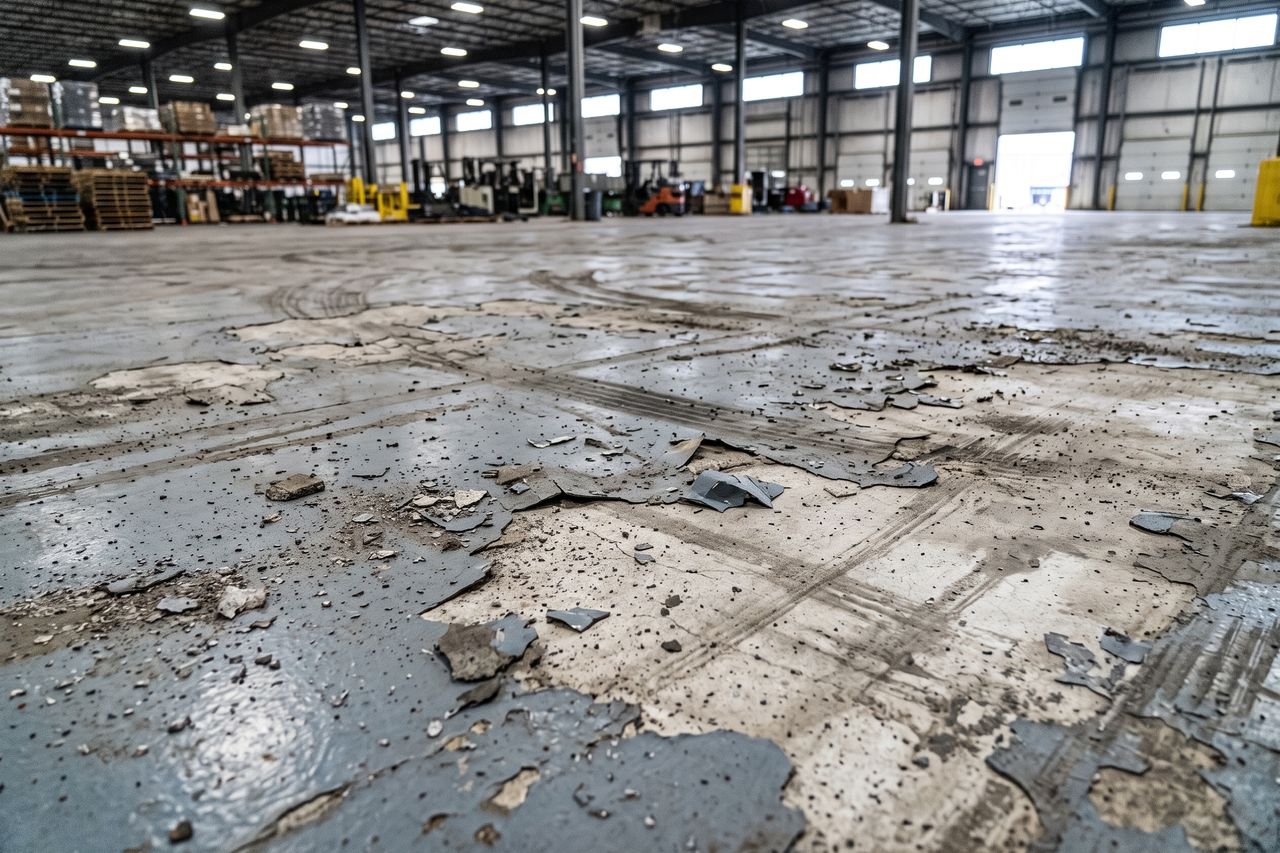
A failing industrial coating doesn’t stay contained to the surface. Delaminating material breaks loose and scatters across the work area, creating debris underfoot and uneven patches that affect equipment movement and footing.
Degraded concrete beneath a failed coating is harder to clean and harder to seal than properly prepared bare concrete. Facilities that depend on dust management or sanitation standards find that a failing floor compounds those challenges at every sweep.
The operational cost of a failed industrial coating is also easy to underestimate. Removing an existing coating, preparing the slab again, and applying a new system takes the affected area offline. Equipment has to be relocated. Work has to shift around the project. Material and labor costs stack on top of each other — often totaling more than a properly specified installation would have cost from the start.
A Floor That Keeps Up With Your Operation
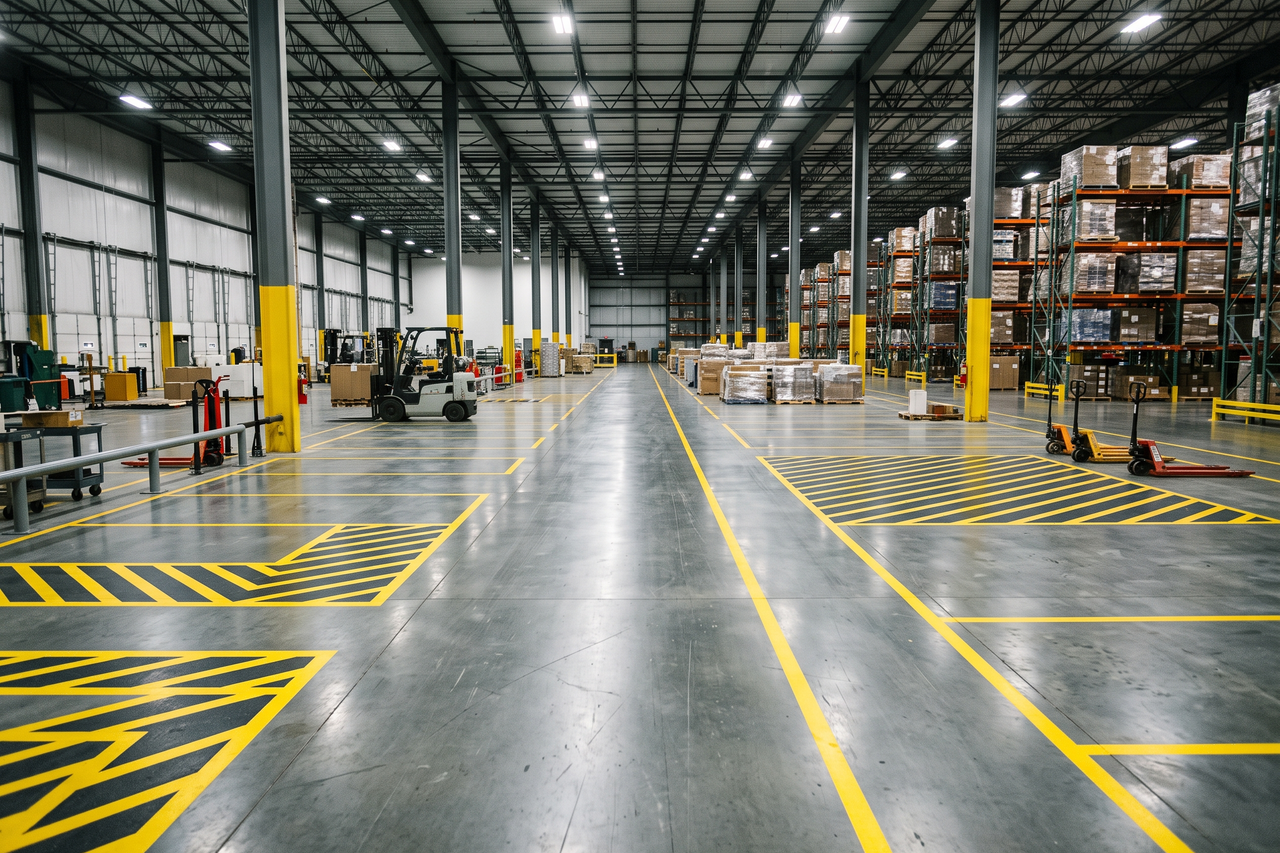
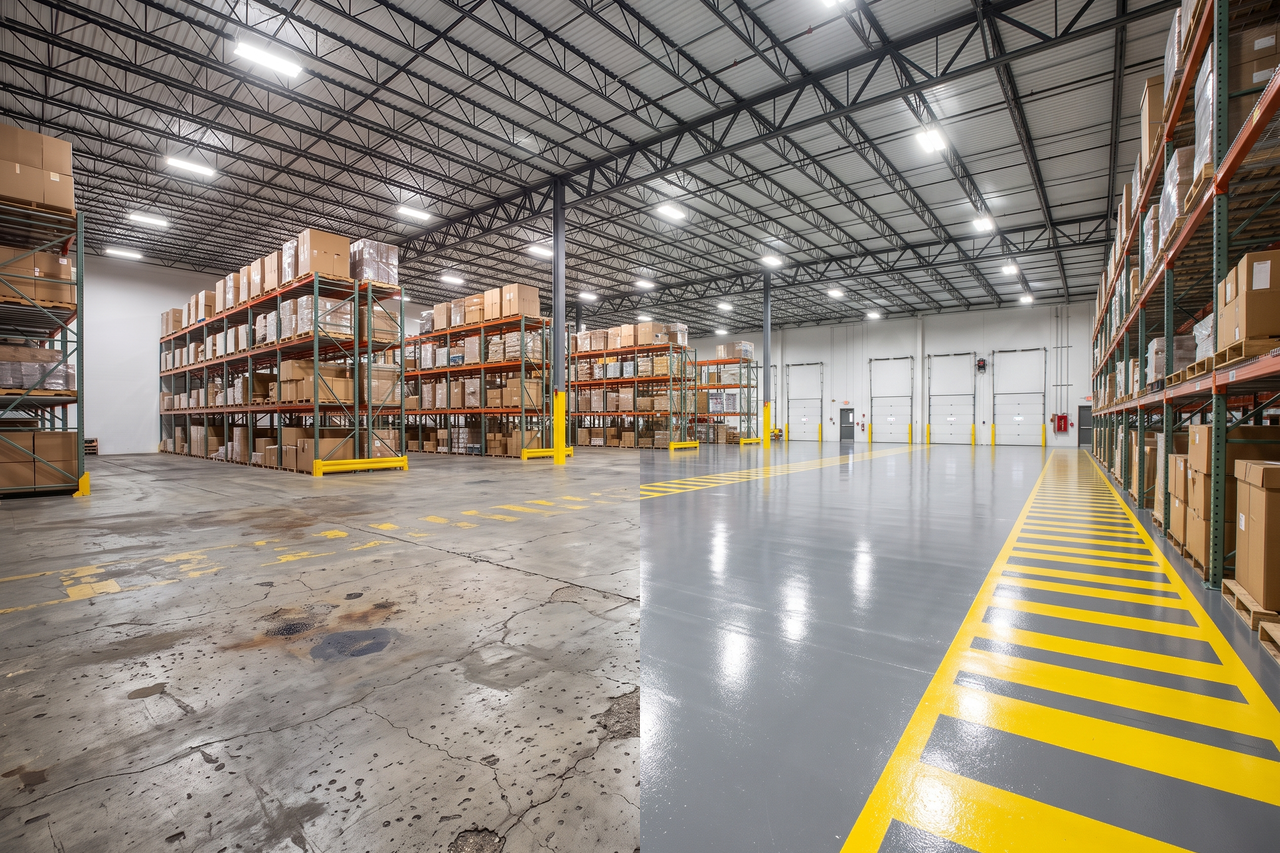
A correctly specified industrial coating creates a surface that handles the daily demands of the facility without constant intervention. Abrasion from rolling loads, chemical splashes, and routine cleaning all become easier to manage when the floor is sealed and designed for those conditions.
Sealed concrete generates significantly less dust than raw concrete, which matters for facilities where air quality and equipment maintenance are practical concerns. Better light reflectivity from a coated surface can also improve visibility in working areas without changing the lighting layout.
Color-coded safety zones, aisle markings, and slip-resistant finishes can be integrated into the coating plan, depending on the system selected and the layout of your space. When the floor is doing what it was designed to do, it stops creating friction and starts supporting how the facility operates.
What Does Industrial Epoxy Flooring Cost?
Industrial flooring costs vary based on the total area, the current condition of the concrete, the scope of preparation and repairs required, the thickness and chemical resistance specifications of the coating system, and whether line striping or zone marking is part of the project scope.
Because every facility is different, an accurate number requires evaluating your specific space. The flooring contractor reviews the slab, the conditions the floor operates under, and the scope of work before putting together pricing — not a general estimate built on square footage alone.
Common Industrial Flooring Questions
Can industrial coatings handle forklift and pallet-jack traffic?
Coating systems exist that are designed for facilities with heavy wheeled traffic. Whether any specific system is appropriate for your operation depends on the load weights, traffic frequency, concrete condition, and the coating selected. The contractor evaluates those factors before making a recommendation.
How well do industrial coatings resist oils and chemicals?
Many industrial systems offer meaningful resistance to oils, fuels, and common chemicals, but performance varies considerably across products. The specific substances present in your facility — including cleaning agents — need to be part of the evaluation conversation so the right system can be matched to those actual conditions.
Can safety striping and zone markings be added?
Safety markings, aisle designations, work zone boundaries, and traction-enhancing topcoats can all be built into the project scope. The specific options available depend on the products selected and the layout of the facility — questions worth raising with the contractor early in the planning conversation, before any scope is finalized.
How much operational downtime should we expect?
How long the affected area needs to be offline varies with the scope of the project — including total square footage, the extent of prep and repairs, the coating system applied, and what can continue operating nearby while work proceeds. Those are scheduling details to sort through with the contractor before work begins. Whether a phased or staged approach fits the project depends on the specifics and should be part of the estimate conversation.