
Epoxy Garage Flooring
in Mendota, IL
A hardworking floor that holds up to everything the garage throws at it — and looks the part doing it.
Your Garage Should Feel Like Part of Your Home
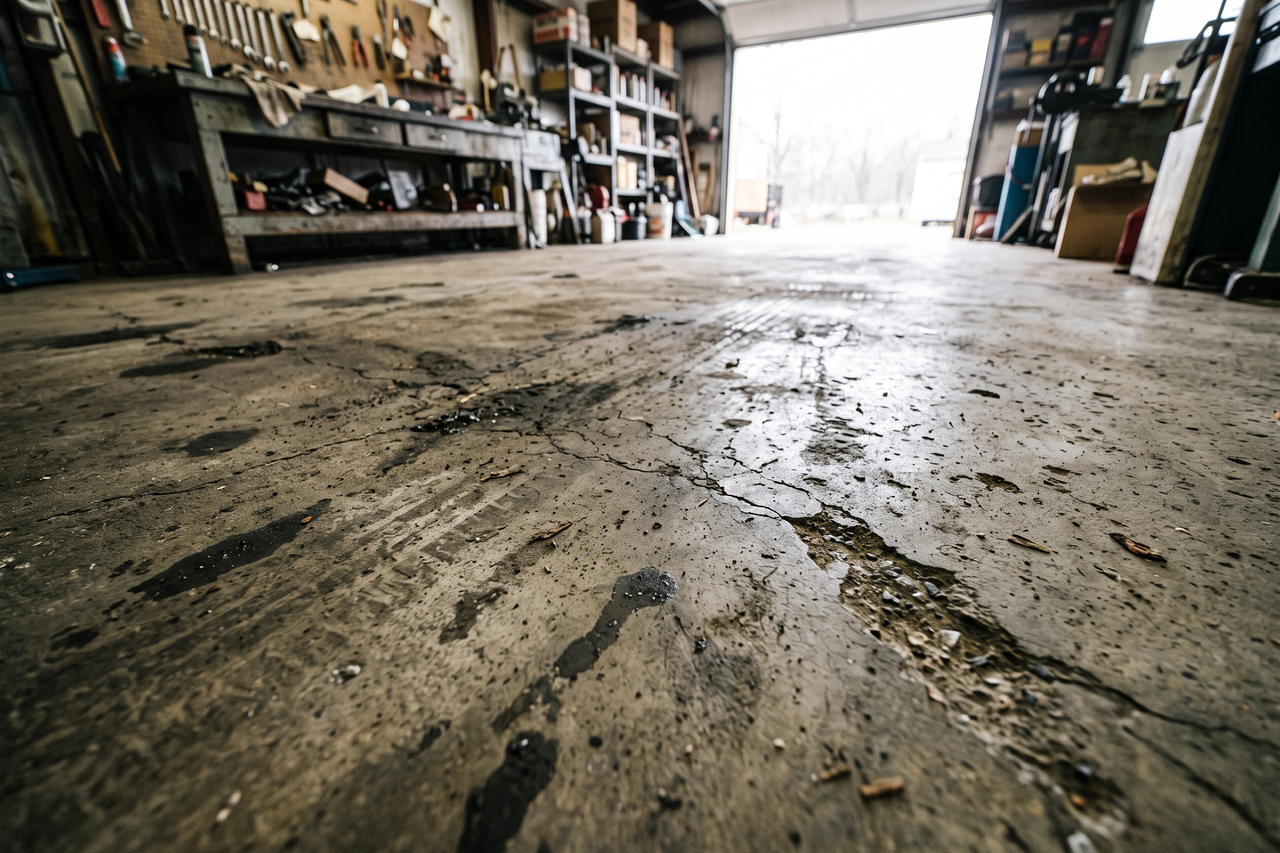
The garage sees more daily foot traffic than most rooms in the house, yet the floor underneath is often the last surface anyone deals with. Engine oil soaks into the pores, tire marks spread across the slab, and a fine concrete dust drifts onto everything stored along the walls.
Bare concrete is porous by design — it was made to be poured, not to stay clean under working-garage conditions. Spills sink in rather than sitting on the surface, and grime accumulates over years of routine use.
Off-the-shelf paints and roll-on kits can look like a practical shortcut, but a coating applied to concrete that hasn’t been mechanically prepared has little to hold onto. Heat, friction, and daily traffic tend to reveal that weakness earlier than most people expect.
You Don't Have to Know Which Garage Floor Coating Is Right
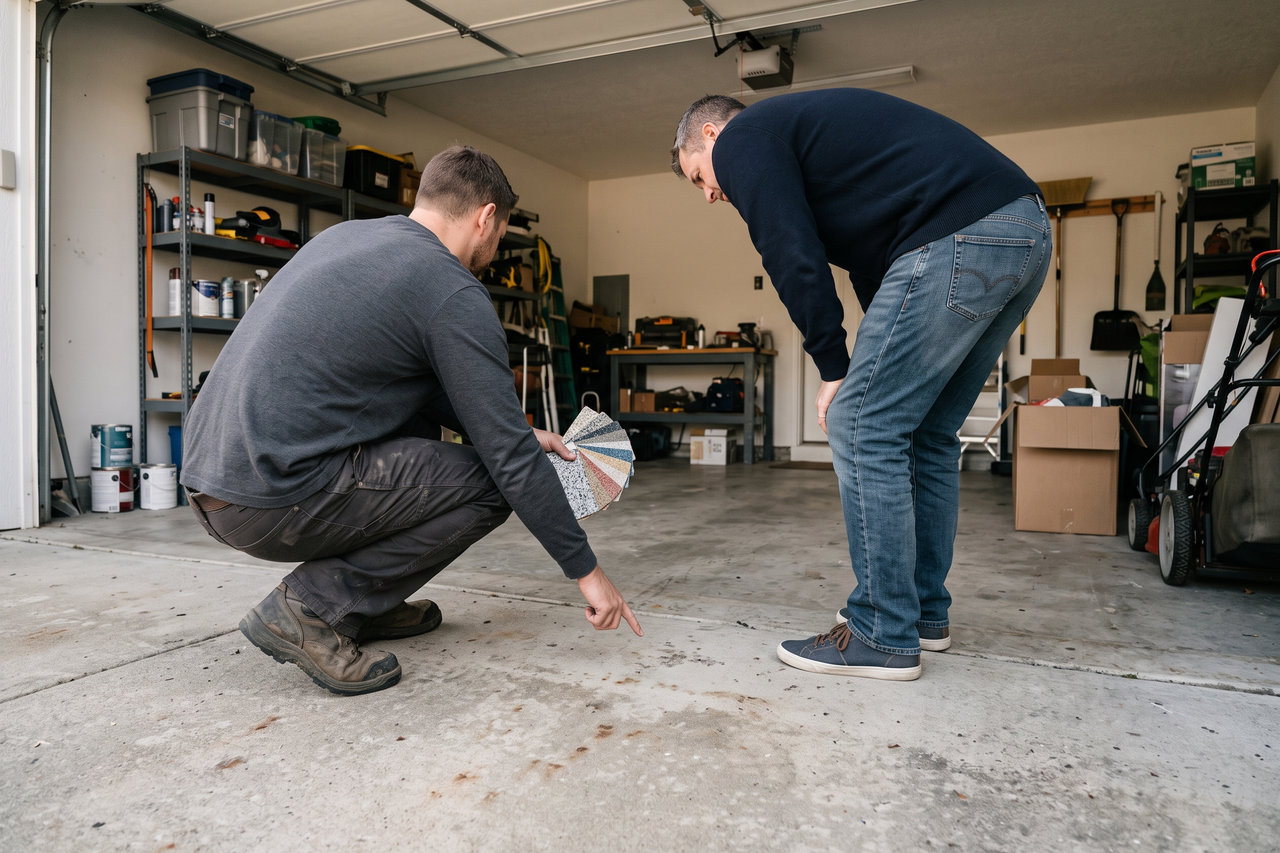
Settling on a garage floor coating without knowing your specific situation is like picking paint without seeing the room. The best choice depends on how the garage functions day to day, how much direct sun reaches the slab, what the concrete looks like underneath, and the finish you have in mind.
Your flooring contractor starts by taking a close look at the concrete — noting any cracks, moisture indicators, and what is already on the surface — before a coating system and finish are selected. Flake blends add color and texture that stand up to everyday dust and scuffs. Metallic epoxy creates a one-of-a-kind appearance for garages that also serve as display or hobby spaces.
Your Garage. Your Style. Three Simple Steps.
A clear path from the first conversation to the day you pull in and see the difference.
01
Show Us Your Garage
Walk us through how the space gets used and what the floor looks like right now, so the right options can be identified.
02
Choose Your Floor
The flooring contractor assesses the slab, goes through coating systems and finish choices, and builds a quote tailored to your specific floor.
03
Come Home to a Finished Garage
The contractor readies the concrete surface, installs the coating, and walks you through the curing timeline before leaving the floor in your hands.
Ready to See What Your Garage Could Become?
Let us know about the garage and what you’re hoping to do with the floor. We’ll work to connect you with an independent flooring contractor who can review the project and, if it’s a fit, prepare a customized quote.
The Wrong Garage Floor Can Cost You Twice
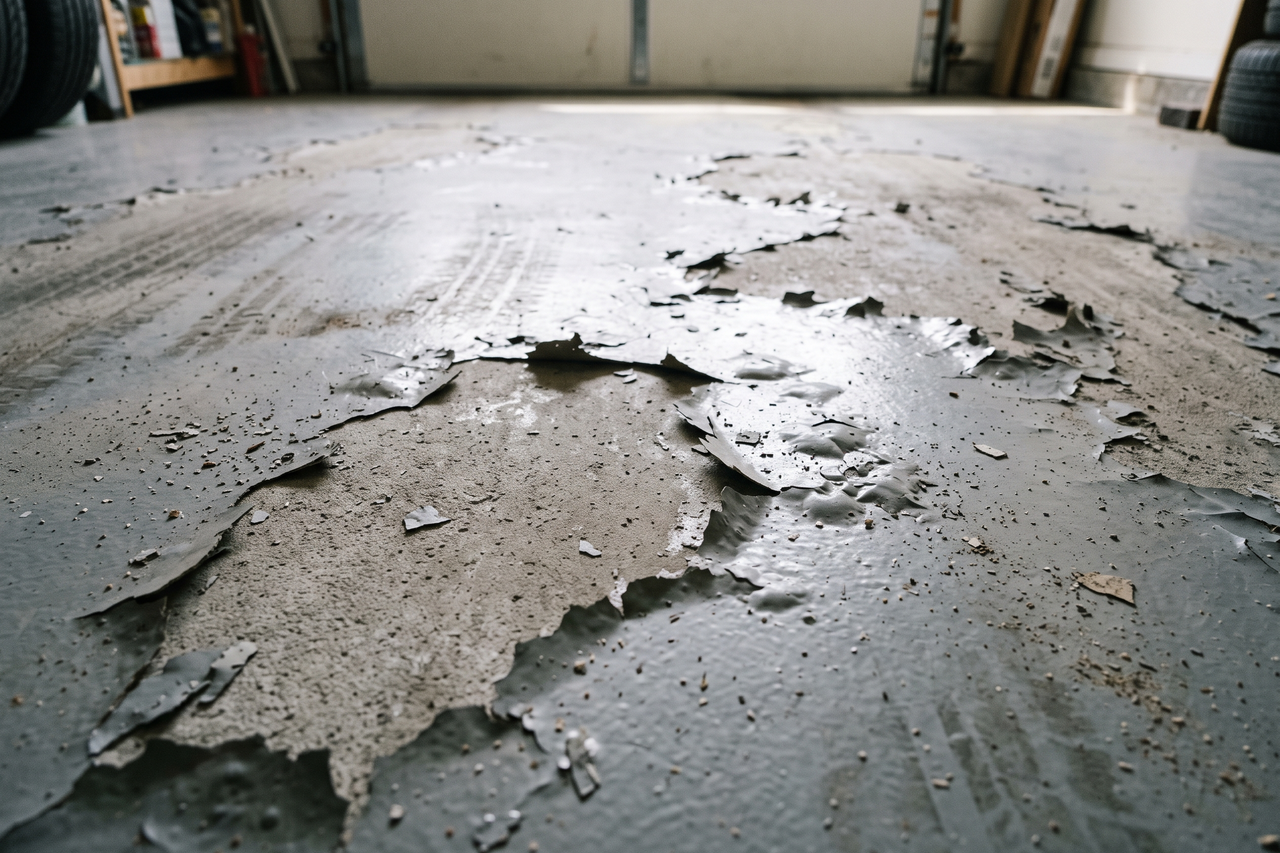
Coatings that fall short often do so for interconnected reasons: inadequate preparation is often part of the problem alongside moisture, the product chosen, and conditions at the time of application. Without properly opening the concrete to an adequate surface profile and attending to existing damage, the new coating starts from a weaker position — and problems like hot-tire lifting or edge separation become more likely down the line.
When a coating lifts or fails, the solution isn’t another coat on top. The degraded surface has to be removed before any new coating can bond — and that process carries its own cost in labor and time.
Investing in the right system and properly prepared concrete tends to cost less in the long run than a cheaper job that later needs to be redone.
A Garage You're Proud to Come Home To
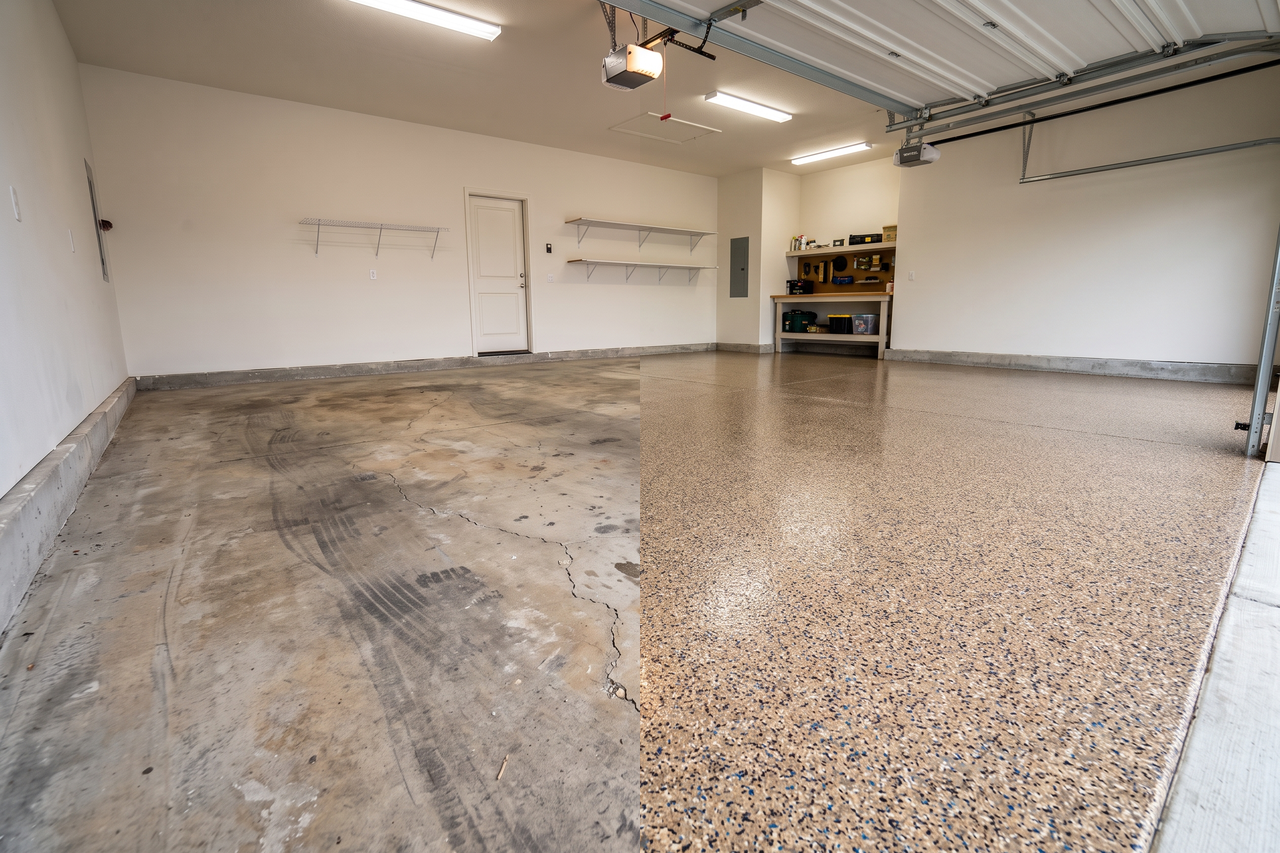
A sealed floor changes the way the whole garage works. Spills, salt, and road grime rest on the surface rather than penetrating it, so a mop handles what would otherwise take real effort to address.
The garage works differently once the floor is finished. Grease and debris can be swept or mopped up rather than embedded in porous concrete, making workshop use, storage organization, and everyday parking noticeably cleaner and simpler.
Whether the garage is a place to park, a side project space, or just somewhere guests pass through on the way inside, a finished floor makes the area feel like it belongs to the house.
What Does Garage Floor Coating Cost?
Several things shape the price: the size of the garage, the condition of the concrete and what it takes to get it ready, the coating system you choose, and the finish. Solid color, decorative flake, and metallic options each carry different material and labor requirements.
The clearest number comes from reviewing your actual floor. A customized quote is based on what the contractor finds when looking at the concrete and discussing your goals — not a rough figure drawn from a square-footage formula.
Common Garage Floor Questions
Do professional coating systems hold up to hot tires?
Professional-grade systems over properly prepared concrete are built to resist hot-tire contact far better than consumer paints or roll-on kits. Preparation quality and the system selected both contribute to that performance, and the contractor recommends a system matched to how you park and use the space.
Can a floor with cracks or oil saturation be coated?
Typically, yes. Cracks and surface defects are repaired during concrete preparation, and spots with oil contamination are cleaned and pretreated before the coating system goes on. Heavily saturated concrete warrants a closer review, and the contractor will say plainly what the slab can support.
Will the finished surface be slippery when wet?
High-gloss finishes can become slick with moisture. Decorative flake adds surface texture that improves grip underfoot, and anti-slip additives can be incorporated into the topcoat in areas where wet conditions are a regular concern — near a garage door or a drain, for example.
When can the garage be used after the coating goes down?
That depends on the coating system and conditions during curing. The installer explains the expected schedule before work begins, covering when foot traffic is acceptable and when vehicles can come back in, so you can plan accordingly.