
Epoxy vs. Polyaspartic Flooring: What's the Difference?
Concrete floors can be coated with either system, but each brings different properties to the project — different cure behavior, different UV performance, and different demands on the installer. The right choice isn’t universal; it depends on the floor and the space. This comparison covers what actually matters when you’re deciding between them.

The Short Answer
Epoxy is the more established product — durable, widely used, and well-understood by professional installers in residential and commercial work. Polyaspartic generally cures faster than many traditional epoxy systems, maintains color stability under UV exposure, and stays pliable across a broader range of ambient temperatures. Advantages that apply in specific situations — not universally. Choosing between them comes down to project conditions: UV exposure, temperature range, the concrete itself, and what the space is being used for. We'll work to connect you with an independent flooring contractor who can review the project and, if it's a fit, prepare a customized quote based on what your floor actually needs.
Key Differences
The right choice isn’t universal; it depends on the floor and the space.
Epoxy
Standard two-part epoxy combines a base resin and a hardener that react when mixed, forming a rigid, dense film on the prepared concrete surface. The cured coating handles vehicle traffic, foot traffic, and most common household and light commercial chemicals. Finish options run from solid color to decorative flake to metallic effects. The curing window is relatively long, which gives the installer time to work across larger areas and apply multi-layer systems with good control over each coat.
Polyaspartic
Polyaspartic is a type of polyurea that generally cures faster than many traditional epoxy systems. That characteristic can work in your favor when limiting disruption matters, but it narrows the working window for the installer and requires precise application technique. Polyaspartic topcoats are UV-stable by formulation, so they don’t develop the color shift that some epoxy resins can show under prolonged sunlight. They also remain flexible across a wider ambient temperature range than most standard epoxy systems.
Which Is Right for You
Neither system is automatically better — both can produce durable, high-performing surfaces when properly installed on well-prepared concrete. The question is which one fits the specific demands of the space. How much UV exposure the floor receives, how critical minimizing disruption is, what the concrete looks like, and how the space is used are all factors the contractor weighs when making a recommendation.
Durability
Both epoxy and polyaspartic coatings produce hard, stain-resistant surfaces that significantly outperform bare concrete, paint, and most consumer-grade products under daily use. The more useful distinctions appear in specific performance characteristics rather than overall durability.
Standard epoxy resins can develop a yellow tint under extended UV exposure — a factor worth considering on floors that receive direct sunlight through windows, garage doors, or skylights. UV-stable polyaspartic topcoats don’t exhibit that color shift, which makes them a common choice for sun-facing spaces, covered outdoor concrete, and areas with significant natural light.
Temperature range is another area where the systems differ. Epoxy can be sensitive to cold — both in how it cures during installation and in how it performs in unconditioned spaces. Polyaspartic coatings maintain flexibility and bond characteristics across a wider range of ambient temperatures, which can matter for garages, outbuildings, or commercial spaces where indoor temperatures aren’t controlled.
Install Time
Understanding what goes into the preparation phase — and why it affects both the timeline and the final result — is covered in our guide to concrete preparation for epoxy flooring.
The most practical difference in schedule between the two systems comes from their curing behavior between coats. Polyaspartic generally cures faster than many traditional epoxy systems, which allows the coating stages to advance more quickly. A multi-layer epoxy system needs each coat to firm up before the next is applied, which adds to the overall duration.
For the property owner, that difference can affect how long the space is out of regular use. For the installer, a faster-curing system narrows the application window and places a premium on preparation being fully completed and conditions being confirmed before the coating goes down.
Any estimate of how long a project will take is specific to that floor — the area being coated, how much concrete prep is needed, how many layers the system calls for, and the conditions at installation time all feed into the actual duration. The contractor discusses the expected schedule before work begins.
Which Is More Expensive?
Pricing factors for both systems — and what a thorough quote should cover — are addressed in our epoxy floor coating cost guide.
Polyaspartic materials typically carry a higher price point than standard epoxy products at a similar quality tier. The UV-stable, faster-curing chemistry commands a premium over conventional epoxy. Labor costs may be comparable depending on the project, though a shorter coating schedule can sometimes offset part of the material difference.
Neither system is the right choice based on price alone. A polyaspartic coating on a floor that wasn’t properly profiled, or a standard epoxy in a space with significant UV exposure, will each fall short of what a well-matched installation could deliver. Value over the life of the floor is the more useful measure than the initial quote.
Which Is Better for Your Garage?
When Epoxy Makes Sense
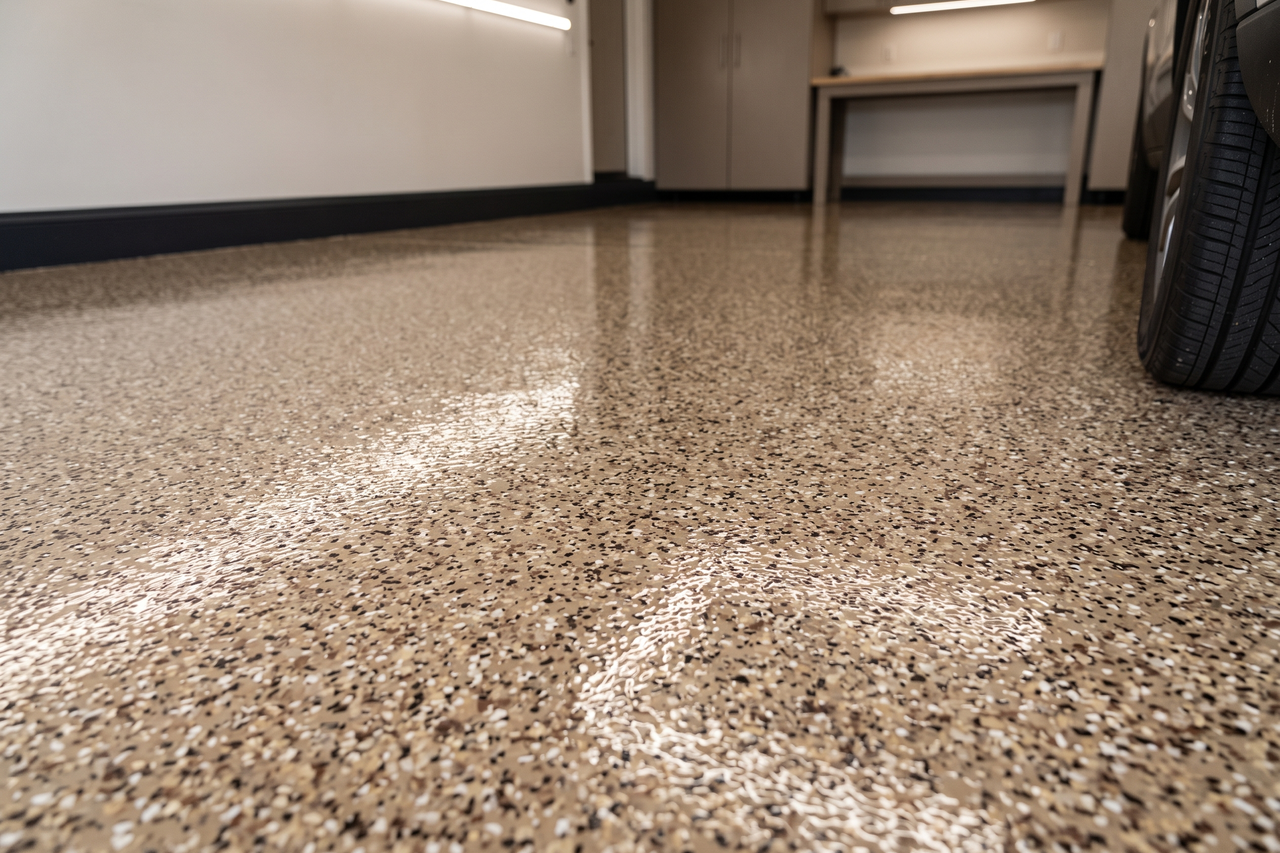
Epoxy is a reliable choice for most residential garages, particularly those with limited direct sun exposure or that are climate-controlled. The longer application window gives the installer more flexibility on larger surfaces and complex layouts. Decorative options — including solid color and flake broadcast systems — are widely available in epoxy, and the product has a long track record in residential garage applications, meaning installers are broadly experienced with its properties and behavior.
When Polyaspartic Makes Sense
Garages that receive extended direct sun through windows or doors, spaces with significant skylight coverage, and covered outdoor slabs where UV exposure is real — these are situations where polyaspartic’s stable formulation holds color where an unprotected epoxy surface might shift over time. It’s also a practical choice when temperature variability in the space makes a wider working-range coating the more appropriate option, or when minimizing the period of disruption genuinely matters. Applying polyaspartic as a topcoat over an epoxy base is a recognized hybrid approach that draws on each system’s strongest property.
Why Professional Installation Matters
For a closer look at what garage floor coating involves — including finish options and what to expect from the process — our garage floor coatings guide walks through what matters before and during the project.
What a coated floor looks like years down the road reflects how well the chosen system was matched to the actual state of the slab — not just which product category was selected. Both coatings depend on a mechanically profiled, clean, moisture-evaluated substrate to adhere as the product specifies.
The flooring contractor we connect you with evaluates the concrete before recommending a system and explains the reasoning before any work starts. If conditions make a particular system unsuitable for the project, that’s a conversation to have during the estimate — not after the coating goes down.
Frequently Asked Questions
Can polyaspartic be applied over epoxy, or epoxy over polyaspartic?
Yes, combining the two in sequence is a legitimate and commonly used approach. Epoxy as the base coat provides the adhesion and structural build; polyaspartic as the topcoat adds UV stability and a faster finish-stage cure. Reversing that order — putting epoxy over a cured polyaspartic layer — is technically more difficult and generally not advisable. The contractor identifies what sequence the existing surface can accept.
Does polyaspartic really shorten how long a project takes?
The coating stages can advance more quickly, because polyaspartic generally cures faster than many traditional epoxy systems — less waiting between layers. Concrete prep work doesn’t change based on what’s being applied afterward; grinding, crack repair, and moisture checks take the same amount of time regardless of which system is selected. The overall project duration reflects all of that combined, not the coating phase alone. The installer explains the expected schedule before work begins.
Is yellowing a problem for all epoxy floors?
UV exposure can cause some standard epoxy formulations to lose color stability — developing a yellow tint or chalky surface over time, depending on the product and the amount of direct sun involved. UV-stable topcoats in the polyaspartic and polyurethane families are formulated to resist that shift, which is why they appear as the finish layer on floors that get meaningful sunlight. Whether this is a real concern for your floor depends on the products in the specified system and the actual sun exposure in the space — your contractor addresses this when making a system recommendation.
Which system handles hot tire contact better?
Hot tire pickup — where a warm vehicle tire bonds to the floor surface and pulls coating away as the tire cools — is typically the result of a coating that was underspecified for the conditions, applied over inadequate preparation, or not fully cured before vehicle use. A quality system from either product family, properly installed on well-prepared concrete, is generally more resistant to this. System selection and preparation quality matter more than which product category is specified.
Are the same decorative finishes available in both systems?
Decorative finishes like color flake, solid color, and metallic effects can be achieved with formulations from both product families. Which specific colors, flake blends, or metallic pigments are available depends on the manufacturer and the installer’s supply relationships. The contractor walks you through the options that work with the system being recommended for your floor.
Is either system DIY-friendly?
Professional-grade epoxy and polyaspartic products are not designed for DIY application. Polyaspartic’s faster cure creates narrow working windows that require experience and appropriate equipment to manage. Consumer-grade kits sold at home improvement stores are different products — formulated for easier application, but not performing at the same level. A professional installation combines product selection with the preparation expertise and the ability to respond to actual floor conditions.
Ready to Choose the Right Coating for Your Floor?
We’ll work to connect you with an independent flooring contractor serving Mendota, IL and surrounding areas who can review the project and, if it’s a fit, prepare a customized quote for the coating system that fits your floor.