
Commercial Epoxy Flooring
in Mendota, IL
Professional-grade floors that hold up to customers, equipment, and the demands of daily business operations.
Your Floors Should Work as Hard as Your Business Does
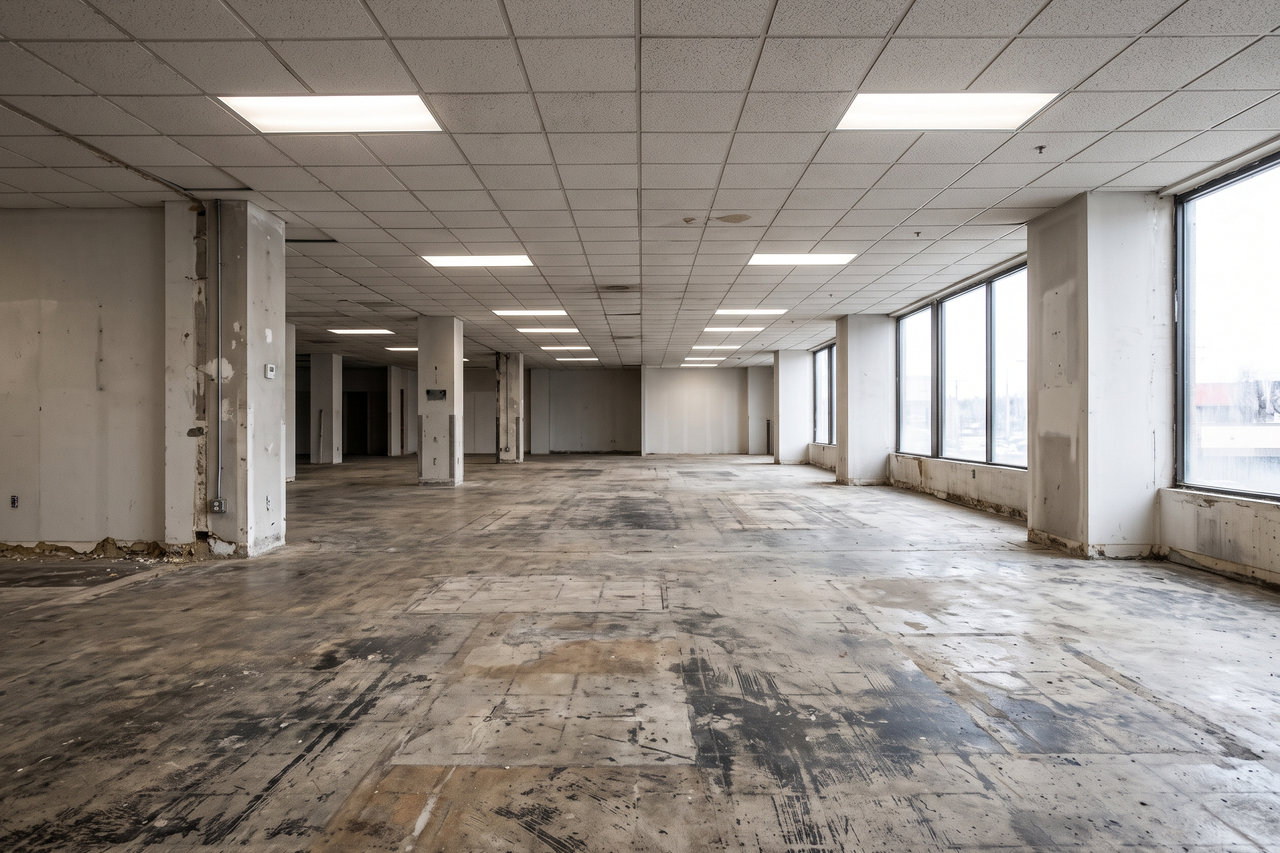
In a retail space, an office corridor, a showroom, or a warehouse, the floor absorbs sustained punishment that bare concrete was never designed to handle without showing it. Foot traffic from customers and staff, wheeled carts, cleaning chemicals, and the occasional dropped load compound over time — and in a high-traffic facility, the wear accumulates faster.
A floor that looks neglected communicates something before a word is spoken. Cracked, stained, or deteriorating concrete in a customer-facing area works against the perception a well-run operation wants to project.
Beyond appearances, unsealed concrete holds onto grime, resists routine maintenance, and demands more frequent attention from whoever manages the space.

The Right Floor Starts With Understanding Your Space
Different commercial spaces make very different demands on a floor. The system right for a retail showroom isn’t necessarily the right system for an office hallway or a warehouse aisle — traffic patterns, equipment types, cleaning chemicals, and slip requirements all vary considerably across commercial environments.
All of that starts with a clear picture of how the facility actually operates. The contractor reviews the concrete and the conditions the space runs under before recommending any system — rather than defaulting to a standard product regardless of context.
On the appearance side, options include solid single-color coatings, decorative flake systems, and metallic epoxy finishes for showrooms and customer-facing spaces where the floor contributes to the overall environment.
A Commercial Flooring Project Without the Guesswork
Every commercial project involves real deadlines and real budget constraints. The process is designed to keep both under control.
01
Tell Us About Your Property
Share the type of space, how it is used day to day, the condition of the existing floor, and any operational constraints that matter to your business.
02
Get a Flooring Plan
Based on the slab review and the facility’s operational requirements, the contractor recommends a system and preparation approach fitted to your actual space.
03
Transform Your Space
The contractor prepares the surface and installs the coating, with the expected project schedule explained before work begins.
Planning a Commercial Flooring Project?
Tell us about the facility and what the space needs to do. We’ll work to connect you with an independent flooring contractor who can review the project and, if it’s a fit, prepare a customized estimate for your commercial space.
The Wrong Floor Can Become an Expensive Problem
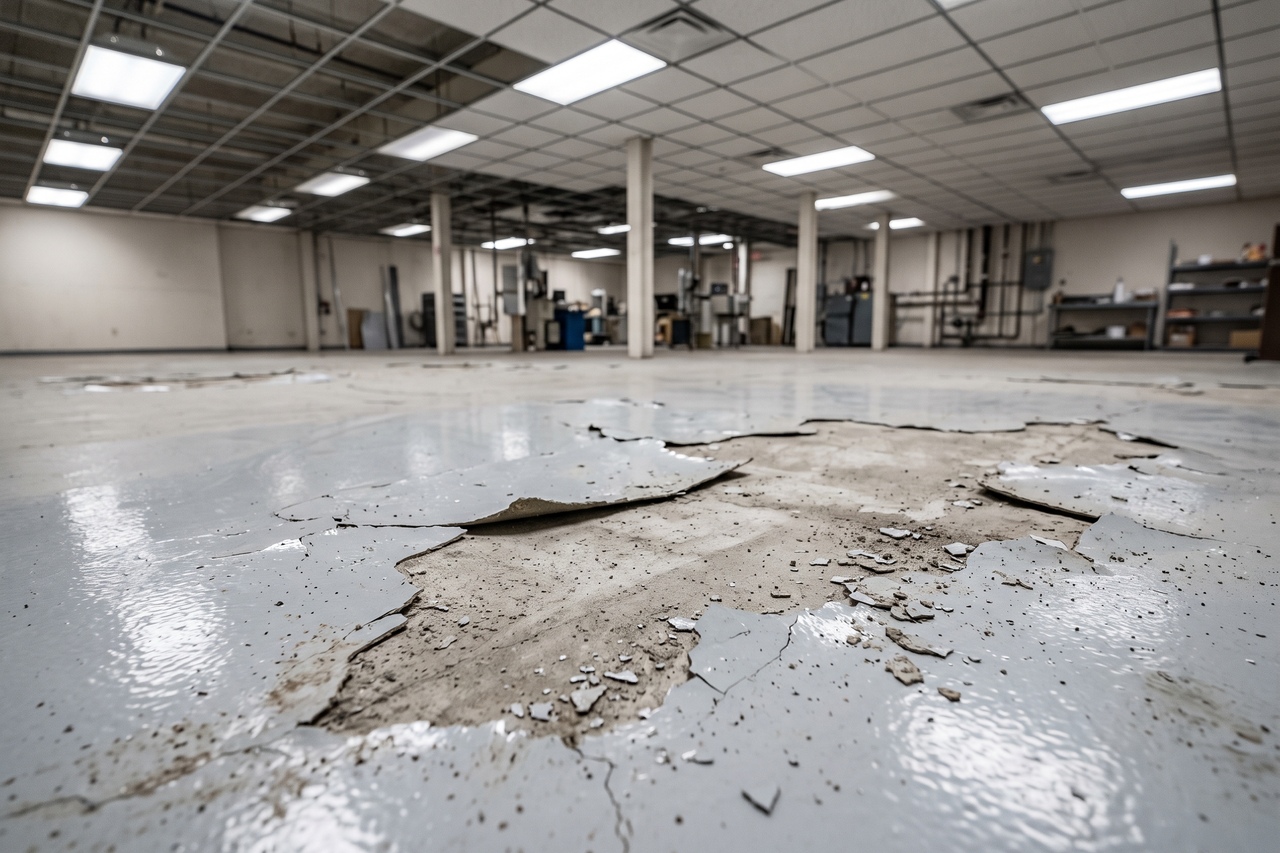
A commercial coating that chips, separates, or wears through before its time is rarely a contained problem. Damaged floor surfaces can create safety concerns for staff and visitors, and they make routine cleaning significantly harder to stay on top of.
Replacing a failed commercial coating in an active facility is disruptive. Clearing the space, grinding off the old material, and starting the installation over carries real cost — both in direct expense and in the operational disruption of doing the project twice.
Choosing a system that fits the actual conditions of the facility and preparing the concrete to the right standard reduces the chance of that outcome.
A Floor That Makes Your Space Work Better
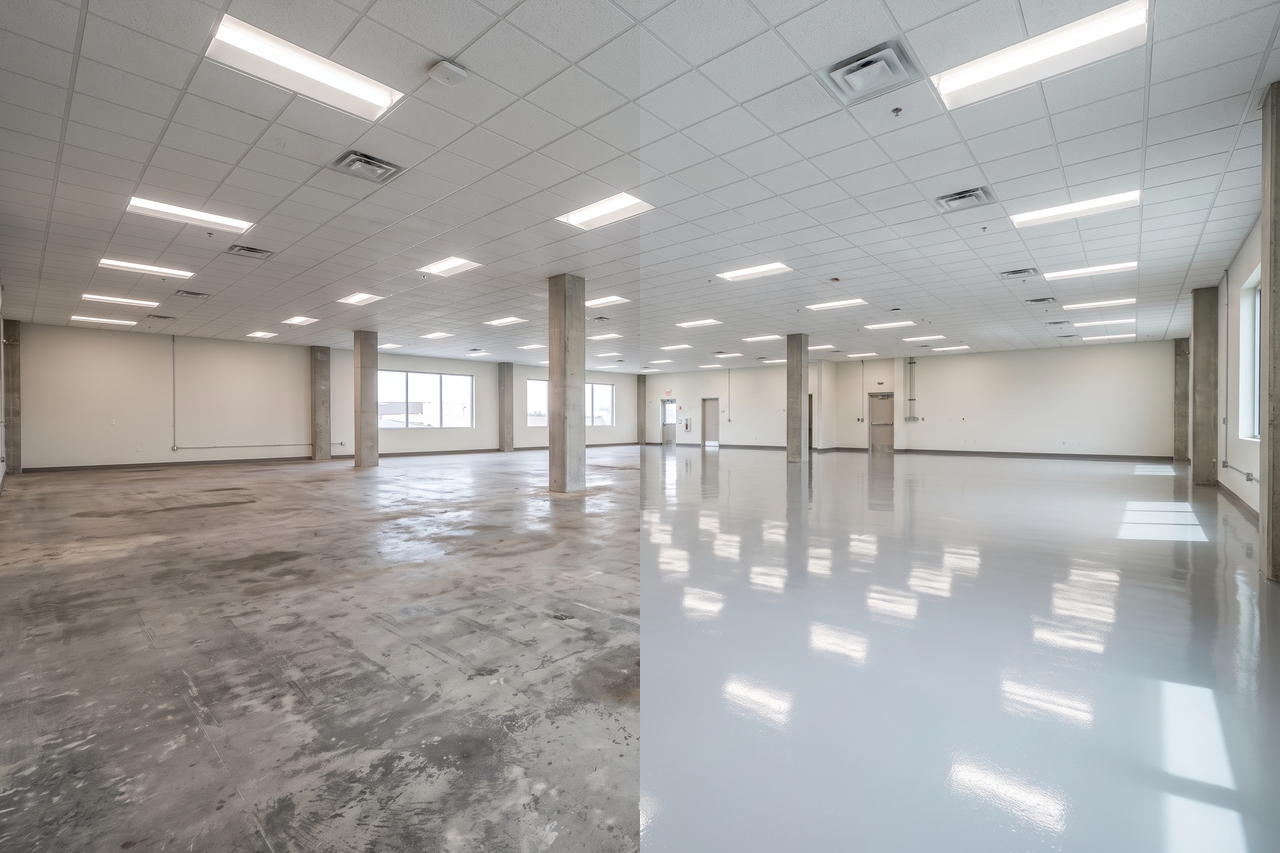
A well-matched commercial floor is easier to keep clean every day. Sealed surfaces resist staining, respond better to routine mopping, and hold up under regular traffic far longer than unsealed concrete — which translates to less time and fewer resources spent on floor upkeep across the life of the coating.
A brighter, light-reflective surface can make a space feel more open without changes to the lighting. Where the operation benefits from visual organization, safety striping, color-coded areas, and aisle markings can be built into the coating plan, subject to the system and the contractor’s recommendation for the facility.
The floor becomes a functional part of the operation rather than a recurring maintenance item.
What Does Commercial Epoxy Flooring Cost?
What a commercial coating project costs varies based on the floor’s square footage, the slab condition, how much concrete work is involved, the system chosen, and the finish. Any performance requirements — chemical resistance, elevated slip ratings, or specific surface textures — affect the overall number as well.
How the installation is timed and phased depends on the size of the project and what the contractor can realistically arrange around the facility’s operations — details that come out of the estimate conversation.
Common Commercial Flooring Questions
Can the work be scheduled around our business operations?
How the project is scheduled depends on what the contractor determines is workable given the facility’s size and operations. Some spaces lend themselves to staged work; others make more sense to handle at once. These specifics come out of the estimate conversation.
How easy is a commercial epoxy floor to maintain?
Well-coated commercial floors are noticeably simpler to keep clean. A quick sweep and mop with an appropriate cleaner handles routine upkeep in most spaces. Spills sit on the surface rather than soaking in, and the floor holds up to cleaning frequency without the deterioration that unprotected concrete shows over time.
Will the floor hold up to heavy equipment and pallet traffic?
The right answer depends on the coating system and what the facility demands of it. Some spaces require systems with greater thickness and abrasion resistance than others. The contractor sizes the recommendation to the actual load and use patterns, not to a generic specification.
Which coating system is right for my type of business?
Which coating works best depends on traffic patterns, what chemicals the floor contacts, how cleaning is done, how much the space’s appearance matters, and the constraints around the installation timeline. The contractor sizes the recommendation to the facility, not to a product catalog.