
Concrete Preparation for Epoxy Flooring
Before any coating product is mixed or applied, decisions made during surface preparation set the direction for everything that follows. A slab that has been properly cleaned, profiled, and assessed gives a coating material the conditions it needs to bond — and hold that bond.

The Short Answer
Concrete preparation for epoxy flooring generally covers three areas: mechanical profiling so the coating material has a textured surface to grip, crack and defect repair before any coating goes down, and moisture evaluation to understand what the slab is doing below the surface. The contractor examines the specific floor and determines the preparation it needs based on its actual condition and the coating system being considered.
The Three Essential Steps
What a professional concrete preparation process generally covers, from initial slab review through the point where coating can begin.
01
Cleaning & Grinding
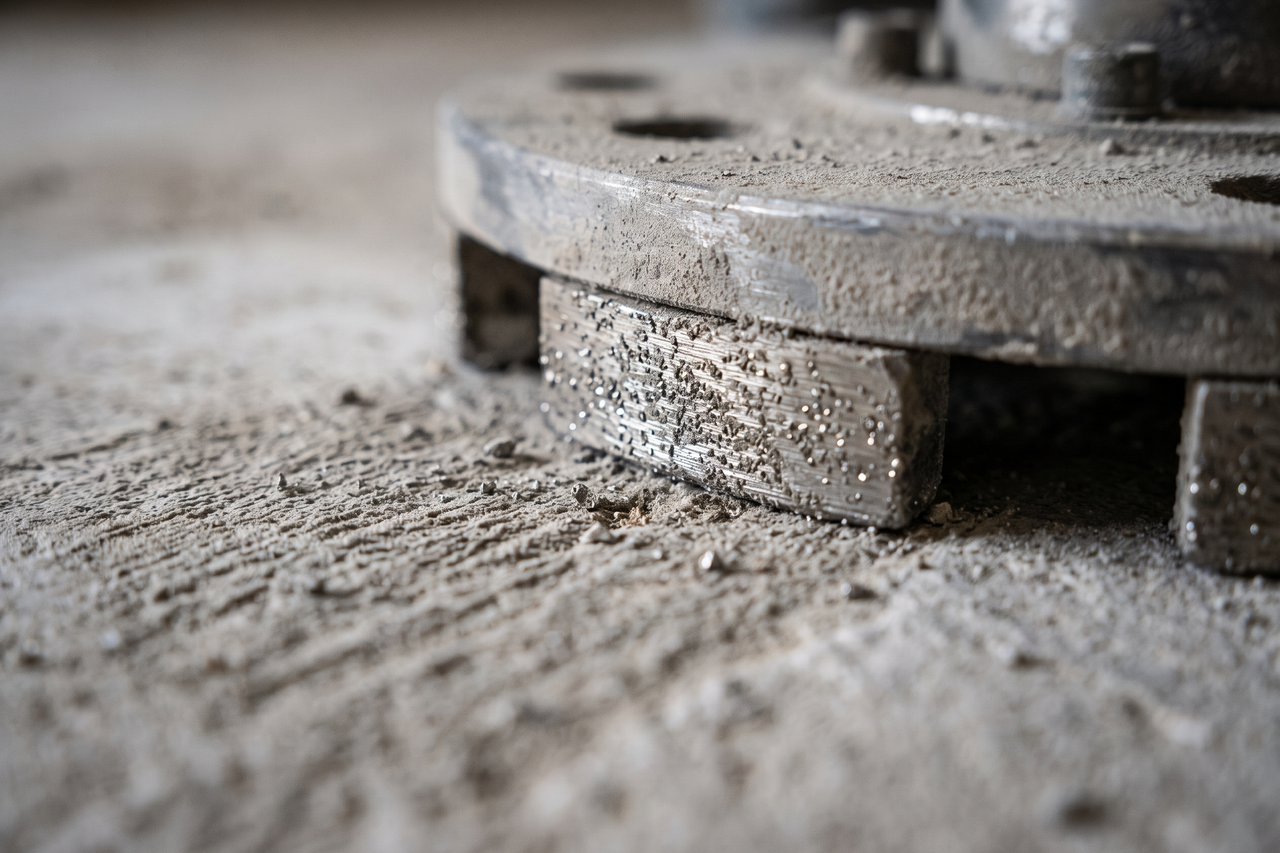
The slab surface is cleaned, then mechanically ground or shot-blasted to open the concrete and create the texture the coating needs to bond. Diamond grinding and shot blasting each achieve this in different ways; the contractor selects the method suited to the slab and the product being applied. Acid etching, once a common substitute, is generally considered less reliable for most modern coating systems.
02
Crack & Surface Repairs
Cracks, spalls, and surface voids are addressed and brought level before any coating product is introduced. A coating bridging over an unfilled crack instead of bonding to solid concrete is set up to show problems along that line once the floor is in use. Our epoxy floor repair guide covers how different crack types are evaluated.
03
Moisture Testing & Inspection
Concrete moves moisture vapor upward from the soil below, and elevated vapor pressure beneath a coating can work against the bond over time. The contractor tests the slab and identifies whether the moisture situation needs to be addressed before the coating system is selected.
How Does Grinding Improve Adhesion?
A concrete surface that has not been mechanically profiled is too smooth — or too sealed — for coating material to anchor to effectively. Epoxy and polyaspartic systems need a slightly rough, open surface texture to form a mechanical bond with the slab. That texture comes from grinding or shot blasting, not from the original pour.
Two methods dominate professional surface preparation: diamond grinding, which uses rotating tooling to cut away the top layer and open the aggregate, and shot blasting, which propels abrasive media to create a comparable profile through impact. The resulting surface — clean, textured, and open — is what gives coating material a mechanical foothold. Which method suits a specific project comes down to the slab’s condition and the coating being applied.
Profile depth requirements change based on the coating system and the slab’s starting state. The contractor reviews the floor and determines the right preparation method and target depth before any equipment is set up.
Should Cracks Be Repaired First?
Crack repair is part of the preparation sequence — it happens before any coating is introduced. Laying a coating over an existing crack positions the product across an active gap rather than bonded to solid concrete on both sides. As the slab moves with load or temperature change, that gap tends to telegraph through the finish.
Crack assessment is case-by-case. Hairline surface cracks typically fill cleanly using an appropriate epoxy repair product as part of the standard preparation sequence. Cracks that appear active or extend more deeply call for closer examination — understanding what is causing the movement matters before any repair material goes in.
For a closer look at how different crack types are evaluated and addressed, see our epoxy floor repair guide.
Why Is Moisture Testing Important?
Below most concrete slabs, soil moisture is present to some degree — and vapor migrates upward through the porous slab continuously. A coating applied over a slab with elevated vapor transmission traps that pressure at the bond line, where it can gradually push the coating away from below. Bubbling, blistering, and progressive separation can all result.
Moisture readings give the contractor actual data about what the slab is doing before any product is selected. Some coating systems are better suited to elevated vapor environments than others; some floors call for a mitigation primer before the main coating goes down. What the readings show determines the approach.
Coating a slab without moisture data means selecting products based on assumptions rather than the floor’s measured behavior.
Can Epoxy Go Over Painted or Previously Coated Concrete?
Three things shape the answer: what the existing material is, whether it is still properly adhered to the concrete, and whether it is compatible with the new coating being considered.
A prior coating that has already lost adhesion — lifting at edges, flaking in sections — is not a stable base. Placing a new coating over a failing layer moves the adhesion problem upward rather than resolving it.
When the existing material is still fully bonded and product compatibility can be confirmed, overcoating may be viable. The preparation review establishes which path is appropriate for that floor. Whatever is currently on the surface factors into every decision about what the preparation process needs to accomplish.
How Should You Prepare Your Garage Before the Contractor Arrives?
The technical side of preparation — profiling, filling cracks, running moisture tests — belongs to the contractor. On your end, a few steps make it easier to reach and accurately evaluate the full slab surface.
Garage prep checklist:
- Clear all vehicles, tools, and stored items from the floor so the entire slab is accessible.
- Note any spots that stay damp after rain, show white mineral deposits, or feel different underfoot — those observations give the contractor useful context during the evaluation.
- If paint or a prior coating is on the floor, pass along whatever you know about the product, even if it’s just the brand name.
- Talk to the contractor about the project timeline — specifically when the floor will be back in service for foot traffic and vehicles.
To understand the full scope of a professional coating project from start to finish, our epoxy floor installation guide walks through each stage in detail.
Frequently Asked Questions About Concrete Preparation
How much does surface preparation affect the final result?
Surface preparation problems are frequently involved when a coating fails — typically alongside other contributing factors: moisture conditions in the slab, the coating formulation chosen, and how the application was executed. A coating placed over concrete that wasn’t adequately profiled, cleaned, and repaired starts at a disadvantage in bonding to the concrete. Getting preparation right gives the coating a better foundation for long-term performance.
Does every floor need the same level of preparation?
Preparation scope varies considerably from project to project. A relatively clean slab with low moisture readings and no existing coatings calls for a different scope than a floor with years of staining, active cracking, or an old coating that needs removal. The contractor sets the preparation plan after reviewing the specific floor — not before.
What if the concrete has a number of cracks?
Crack type matters more than crack count. Stable, hairline surface cracks typically fill cleanly as part of the preparation sequence. Deeper cracks, or those that look active or show signs of ongoing movement, call for closer examination — the contractor determines the right approach for each one after inspection.
Is acid etching an acceptable alternative to grinding?
Mechanical grinding has largely replaced acid etching for most modern coating applications. Etching produces a less consistent surface profile, and residue control is critical. The contractor recommends the preparation method suited to the specific coating and the slab’s condition.
How long does newly poured concrete need to cure before coating?
Newly poured concrete generally needs roughly 28 days to cure before an epoxy or polyaspartic coating can be applied — this is a common guideline in the industry, not a fixed rule. The specific window depends on mix design, site conditions at the time of the pour, and the coating system planned. The contractor verifies the slab has reached an appropriate cure point before preparation begins.
What happens when the slab shows elevated moisture?
High moisture readings change which products and methods are appropriate — they don’t automatically take a floor off the table for coating. Once the contractor has the data, the product selection and any mitigation steps are matched to what the slab actually shows. Floors with significantly elevated readings sometimes require a dedicated moisture-control primer before the main coating.
Ready to Get a Quote for Your Concrete Floor in Mendota, IL?
Understanding what your specific slab needs is the right starting point for a coating that performs. We’ll work to connect you with an independent flooring contractor who can evaluate the floor, outline what preparation it requires, and, if it’s a fit, prepare a customized estimate for your project.