
Polyaspartic Floor Coatings
in Mendota, IL
A UV-stable, durable coating evaluated for your floor’s specific conditions and how you actually use the space.
Your Concrete Floor Shouldn't Be the Weak Point of Your Space
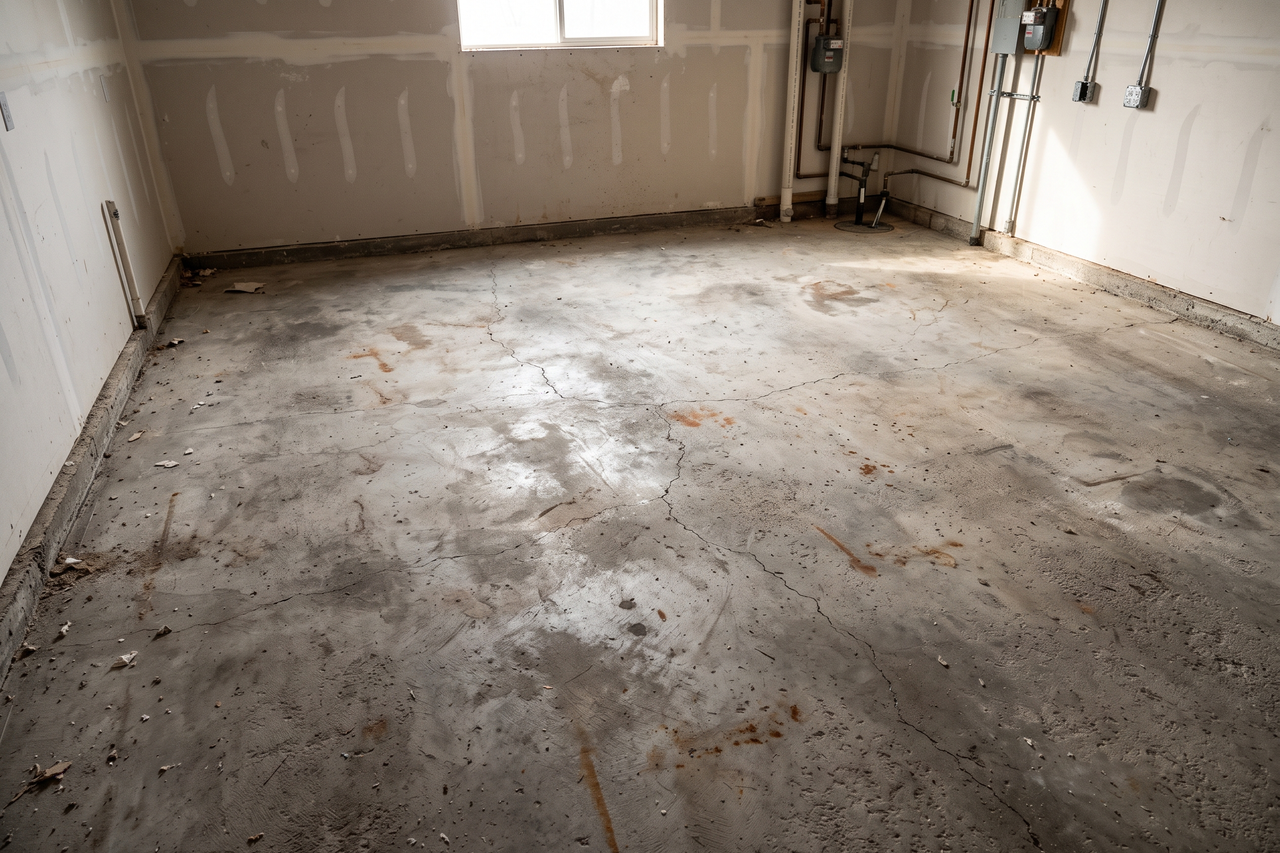
Raw concrete in a garage, shop, or commercial space rarely holds up the way people expect. Traffic marks it, oil soaks in, moisture works up from below, and over time the surface starts to pit, crack, and shed fine dust that spreads with every pass of a broom.
Standard floor coatings address some of that, but they introduce their own tradeoffs. Extended cure windows keep a garage or business space sidelined longer than expected. Coatings that lack UV stability start to shift color in spaces where sunlight reaches the floor, and the change tends to become more noticeable over time.
For property owners thinking about a coated concrete floor, the real decision usually isn’t whether to coat — it’s which system actually fits the space.
The Right Floor Coating Starts With How You Use the Space
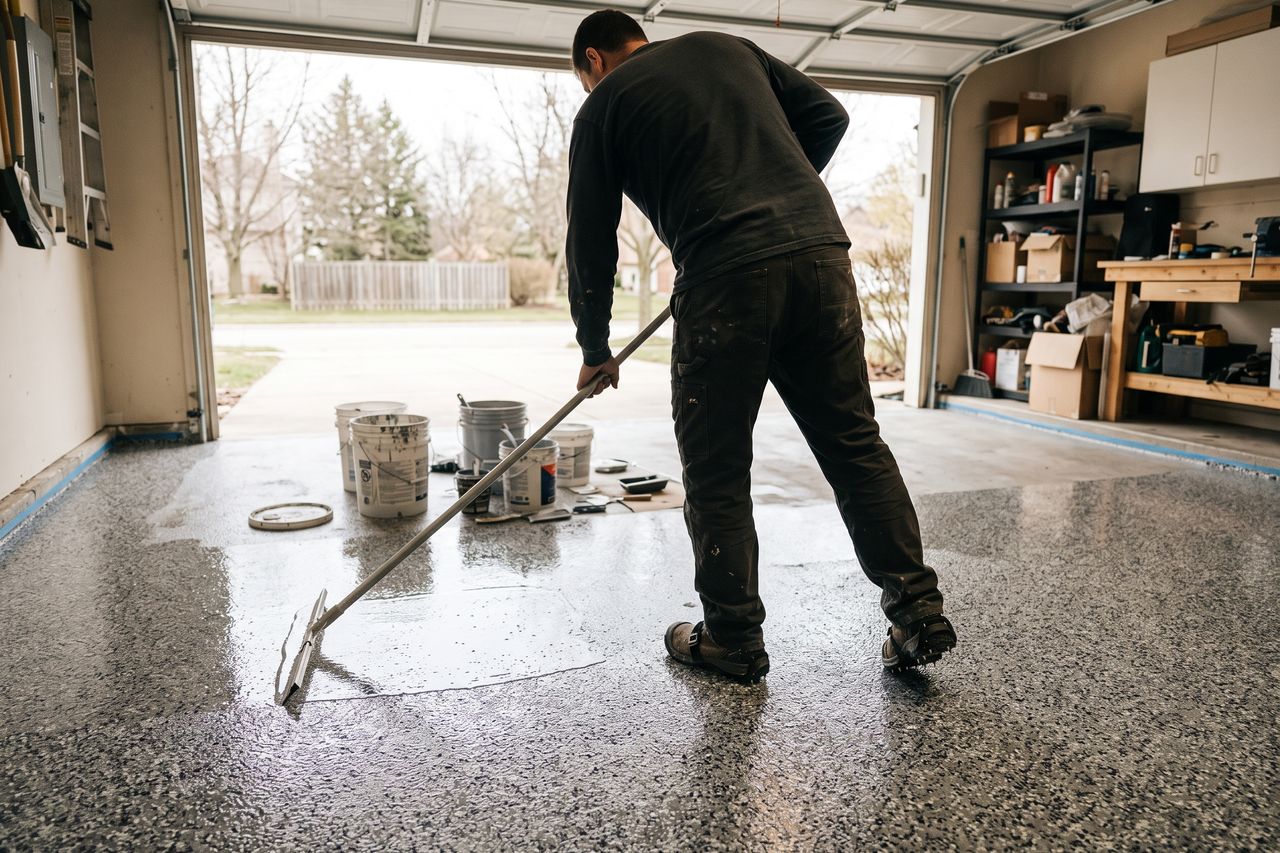
Polyaspartic coatings are formulated with a specific profile: UV stability that resists color shift in sun-exposed areas, strong abrasion resistance, and a cure rate that generally cures faster than many traditional epoxy systems. For the right project — a garage exposed to daylight, a commercial floor with regular cleaning, a covered outdoor area — that combination is genuinely useful.
It is not, however, the right answer for every floor. Moisture in the slab, concrete condition, the demands placed on the surface, and overall project budget all factor into which system a contractor actually recommends. In some situations, the best outcome comes from pairing a polyaspartic topcoat with an epoxy base — the appropriate combination depends on the system selected and the conditions of your specific floor.
The contractor evaluates the concrete and discusses the options with you before any system is recommended. The comparison guide linked below covers the meaningful differences between epoxy and polyaspartic in detail, if you want to review them before that conversation.
A Better Floor Is Easier Than You Think
Getting from bare concrete to a finished polyaspartic floor is a defined process — not a complicated one.
01
Tell Us About Your Space
Share where the floor is, what the surface is like, how the space gets used, and what matters most to you — UV stability, finish appearance, or anything else that’s been on your mind.
02
Choose the Right System
The contractor evaluates the concrete and recommends a system — fully polyaspartic, a hybrid with an epoxy base, or an alternative — based on the actual condition of the floor and your project goals.
03
Transform Your Floor
The contractor prepares the slab, applies the coating system, and walks you through the return-to-service timeline before work begins, so you know what to expect.
Ready for a Floor Built to Perform?
Tell us what the floor is dealing with and what you want from it. We’ll work to connect you with an independent flooring contractor who can review the concrete and, if it’s a fit, prepare a customized estimate for your project.
A Great Coating Can't Make Up for Poor Preparation
Polyaspartic is a capable coating material, but its performance depends on what’s under it. No coating bonds reliably to concrete that hasn’t been properly cleaned, profiled, and checked for moisture — polyaspartic included.
One aspect of polyaspartic that sets it apart from epoxy is its working window. The faster cure rate that makes it appealing also means the application window is shorter. Once the material goes down, adjustments become difficult quickly. That puts extra weight on the preparation phase — the concrete needs to be in the right condition before the coating is mixed and ready to apply.
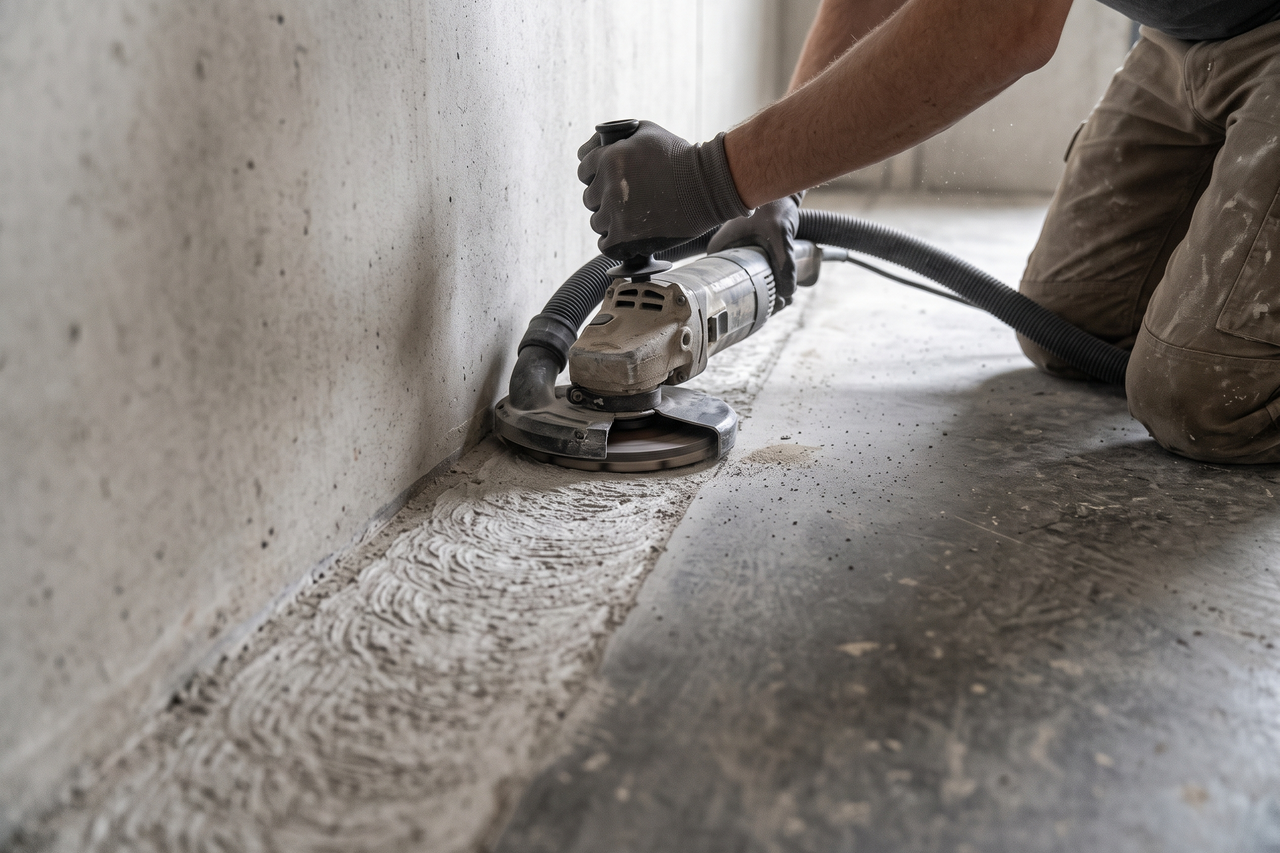
Grinding, crack repair, and moisture evaluation each contribute to a better foundation for long-term performance. Prep is often part of the problem when a coating fails, alongside moisture issues, coating selection, and installation conditions. Addressing those factors before application is how the system has a real opportunity to perform the way it should.
A Floor That Looks Better and Works Harder
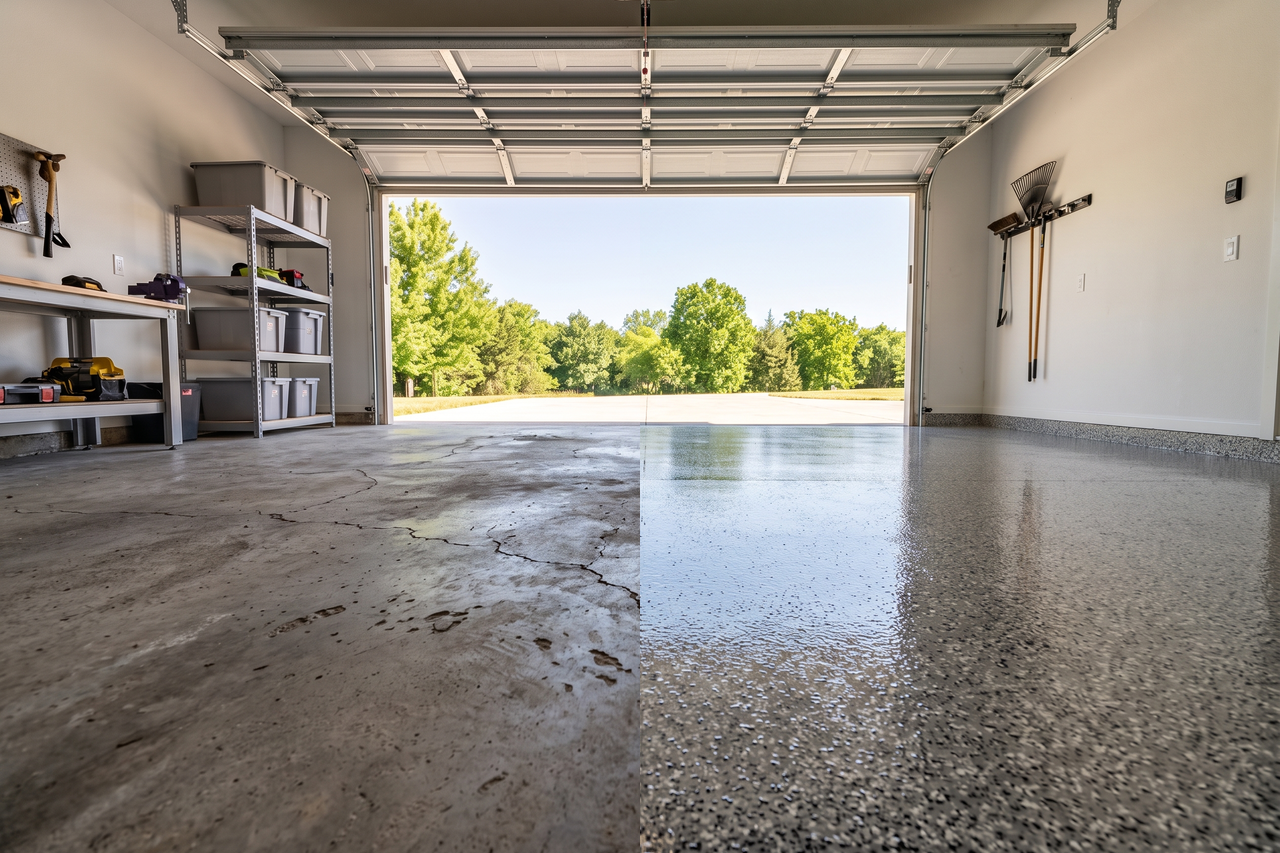
A polyaspartic coating done right creates a smooth, glossy surface that handles the daily use of a garage, commercial floor, or covered concrete area without demanding constant attention. Spills that would soak into uncoated concrete can be wiped from a sealed surface before they have a chance to stain.
Decorative flake systems add visual interest and a range of color options to match the space. Textured topcoats and anti-slip additives are available where traction matters. The finish options are broad enough to work in a polished residential garage or a high-traffic commercial setting — depending on what the contractor recommends for the specific project.
Because this type of coating generally cures faster than many traditional epoxy systems, it can mean less disruption to a household routine or a business operation. How much less disruption depends on the floor size, the preparation involved, and the system applied — the installer explains the expected schedule before any work begins.
What Do Polyaspartic Floor Coatings Cost?
Polyaspartic coating costs are shaped by the square footage of the area, the condition of the concrete and the extent of preparation required, whether cracks or other defects need to be repaired, whether the final system is fully polyaspartic or a polyaspartic-over-epoxy hybrid, and the finish selected.
Every floor is different. A meaningful cost estimate comes from evaluating your specific concrete — not from applying a generic per-square-foot rate. The contractor reviews the slab and the scope of the work and prepares pricing based on what the project actually requires.
Common Questions About Polyaspartic Floor Coatings
How quickly does a polyaspartic coating cure compared to epoxy?
Cure speed is one of the recognized advantages of polyaspartic — the material reaches a workable hardness more quickly than many conventional epoxy products, which is part of why it gets considered for projects where minimizing disruption matters. How much time any specific installation takes still depends on the product used, how many coats go on, and the temperature and humidity on site. The installer lays out the expected schedule before work begins.
Is polyaspartic a better choice than epoxy?
It depends on the floor and the application. Polyaspartic brings UV stability and a faster cure to the table. Epoxy builds film thickness cost-effectively and handles a broad range of interior environments. A number of high-performing floor systems layer the two — epoxy down first for body, polyaspartic over the top for UV resistance and surface durability. The contractor looks at your floor and what the space demands before settling on a direction.
Will a polyaspartic floor hold its color in sunlight?
Polyaspartic chemistry handles UV exposure noticeably better than conventional epoxy formulations, which tend to amber or yellow in sun-exposed areas over time. That difference makes polyaspartic worth considering for garages, shops, and covered surfaces where direct light reaches the floor regularly. The specific product selected and how it’s applied still factor into the outcome — the contractor reviews the space before making a recommendation.
Can polyaspartic be applied to outdoor concrete?
Covered or partially sheltered concrete — a porch, carport slab, or shaded patio — is sometimes a reasonable candidate for polyaspartic, partly because of how the material handles UV and surface wear. Whether any specific outdoor project is a viable fit depends on the slab’s condition, how water drains across it, the extent of sun and weather exposure, and how the area is used. An evaluation of the concrete is the starting point before any system gets recommended.
Is a high-gloss polyaspartic floor slippery?
A smooth, high-gloss surface can become slick when wet. Decorative flake broadcast, textured topcoat options, and anti-slip additives are available and can be factored into the system depending on where the floor is and how it’s used. It’s a practical question to raise with the contractor during the planning discussion.